Just Wrought

Recovering playwright, once won a STRANGER Genius Award for theater. Now writing a bloated novel about… G-d help me! Theatre.

Category: American History

  • The Bardo of The Salted Wife

    The Bardo of The Salted Wife

    Is it possible to engender genuine horror in an audience through a live stage experience?  That is the standing question for this series of scripts, excerpts and essays which I will be posting throughout this  Halloween season.

    ***

    Sometimes a piece of theatre is crafted specifically and solely as a work of horror.  In recent times, The Woman in Black leaps to mind, but we should also remember that the Grand Guignol in Paris was one of the most successful and longest running commercial theaters of all time. 

    More often, a play will contain components of horror while the larger story lands squarely in the territory of tragedy, e.g. Hamlet or MacBeth. And sometimes, but much more rarely, horror rears its head in a comedy, like my own reincarnation romp, An American Book of the Dead – The Game Show. It is early in the play, and things are cooking along nicely in full farce fashion, as game show host Blink Bodie yucks it up with contestants and Spokesmodels, when suddenly a solid wall of stylized terror stops the fun cold, and, ideally, disorients the audience enough that I can start to really —ahem—“muck” with them.

    Ripped right out of Howard Zinn’s  absolutely essential A Peoples History of the United States, this section is my attempt at staging one of the nastiest tidbits from our nation’s nascent colonization. This isn’t legend.  Zinn cites the Journals of the House of Burgesses of Virginia legislature for this piece of history. So it seems consuming others for one’s one survival and delectation is as old, if not older, as the idea of America itself.

    (more…)

  • Unlosing the Lost Plays

    Unlosing the Lost Plays

    There are great plays that you can never experience fully. Sure, you might see them as movies, or read them as “literature”, but despite what your high school English teacher sold you, plays are not literature, any more than music or sculpture are. You may think you are special and that you can wring every artistic significance from a play by reading it; but you’re not and you can’t. There are aspects of dramatic character that only an actor can convey by speaking out loud, live, in front of you. (Not to get pedantic, but this is why we call it an audience.) Because of this, there are great plays you will never experience—at least not as plays—because of very practical reasons excluding them from the possibility of ever being professionally staged again. 

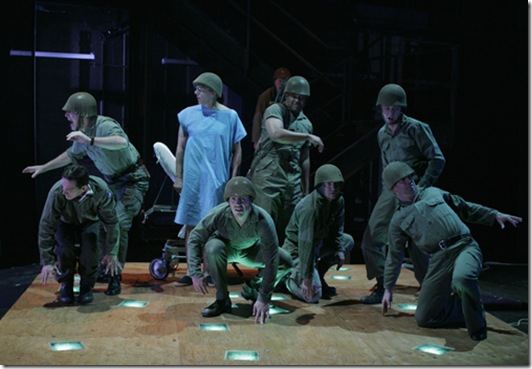
    Stalag 17 by Donald Bevan and Edmund Trzcinski* is just such a play. The original 1951 Broadway cast contained 21 men, a size which is simply not financially sustainable in today’s theatre economy. Beyond cast size, a myriad of other reasons doom to the dusty shelf some of the canon’s greatest plays. Once these plays cease to be performed, they are essentially lost to our culture as works of art, though of course they still have value as artifacts.

    To the rescue rides Seattle’s Endangered Species Project, dedicated to giving monthly staged readings of plays that seldom get full productions.   As they explain on their website:

    In the present economic straights in which regional theatre now finds itself, much of the so called established international repertoire is neglected, for various reasons: there are too many different settings, or the casts are too large, or simply, the publicity requirements of selling a play that is both “old” and unfamiliar to general audiences may seem too daunting.

    We feel that while it is an essential duty of theatres to read and develop new work, our group sees a parallel need to celebrate older or otherwise neglected plays….

    Through our free, simply staged readings, we hope to lend live voices to plays that are now silent on our bookshelves.

    It is the blossoming of projects like ESP that continually renew my faith in Seattle theatre’s progress toward World Class standing.

    Next Monday evening, September 19, at 7 pm you can defy the entropy of modern theatre and see a one-time-only reading of Stalag 17 artfully staged by director Leslie Law, with such brilliant casting as Shawn Law as Sefton (an even more natural choice than William Holden) and Richard Ziman as Sergeant Shultz.  (No, this ain’t Hogan’s Heroes Sergeant Shultz**, though he obviously inspired the sitcom role.  This German non-com has no compunction about torturing a POW on stage to determine the whereabouts of a missing American pilot.)

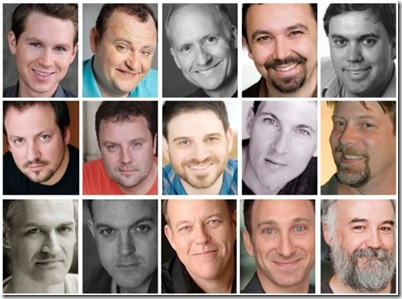
    Stalag 17 Cast featuring:  Brett Brennan, Brandon Whitehead, Allan Armstrong, Gavin Cummins, Eric Polani Jensen, Shawn Law, Paul Mullin, David Goldstein, Vincent Delaney, Keith Dahlgren, Chad Kelderman, Mike Dooly, Richard Ziman, Chris Ensweiler, Galen Joe Ozier

    Even if you only live another ten years, my best guess is that you’ll have about 12 more chances to see Twelfth Night, six to see American Buffalo, and between five and five hundred opportunities to watch something scripted by Sarah Ruhl; but unless my prodigious predictive power fails me now, you will never, not as long as you live, get another opportunity to hear Stalag 17 performed by such a cast as this.

    Don’t miss it.

    (more…)

  • Heather’s Eleventh of September

    Heather’s Eleventh of September

    I told my 9/11 story with the playwright’s notes in the program for the world premiere production of The Good Ship Manhattan,  my hemi-demi-autobiographical play about those days in New York.  That short raw essay also serves as my forward to Original Works Publishing’s printed edition of the play.  So you can check out my version of events from Sunnyside, Queens online here (go to page 4).

    My wife, however, saw the second plane hit the towers with her own eyes from mid-town Manhattan.  For the first time ever, Heather Curtis Mullin has recorded in writing her memories of that day and the days to follow; and I am so grateful that she has given me permission to share them here with you.

    I was working in the Conde Nast building at 42nd and Broadway on the morning of September 11, 2001.  I was in an extremely good mood because my husband had celebrated his birthday the night before and we had been up late but I still felt pretty good.  I was logging in and getting settled at my desk when a co-worker came out of her office and said a plane had hit “the towers.” We walked together to the conference room on the southern end of the building which looked straight downtown to the World Trade Center.  As I made that walk I remember wondering to myself if we’d even be able to see the plane or the damage. One look out the window told me something terrible had occurred. Our view allowed us to see the missing parts of the building where the plane had entered and the enormous fire raging inside. Already at this time the thick black smoke was billowing into the blue and otherwise sunny skies.

    I called my husband who was at home and asked him what was going on. He turned on the TV and informed me that a passenger airliner had hit the tower. As other co-workers began arriving at work there was some discussion as to whether this was an accident or a targeted attack. Many were convinced it was an attack and we all stood in shock and horror as the second plane hit the towers.

    I remember yelling and placing my hand to my mouth. From our vantage point we did not see the plane and the uniform fire-burst made it look like a bomb. I had the sense at this point that we were indeed under attack and wanted more than anything else to get home. I also remember looking down at Times Square below which under normal circumstances would have been crowded with tourists and not seeing a single person.

    Awhile later I called my husband from my desk and asked him what was going on. He confirmed the second plane and seemed in shock by what he was watching. He became extremely emotional when he told me people were jumping off the towers. That was the first moment that I cried and felt truly frightened. I really wanted to leave and try to return to my apartment in Sunnyside Queens, but my husband was concerned the streets would be chaotic and dangerous.

    Around 10:30 -11:00 am most of our cell phones had stopped working and dialing out of the office was met with a recorded message that said “all circuits are busy at this time” so I decided not to break the phone connection with my husband and simply set the phone down on my desk. I asked my husband to call my family in Washington State and he was able to reach my grandfather who relayed a message that at that time I was still alive and well. There was already panic from several people who were unable to reach loved ones near ground zero.

    I honestly have no idea what time the towers collapsed but I heard shouting and screaming from the conference room and went running there to investigate. All I could see was a giant cloud of black and grey smoke towering toward the sky. It ‘was then that I decided I would leave the building and make my way across Manhattan to the 59th Street Bridge.

    The subway was not running so I would have to walk the five-plus miles to my apartment building. Someone had gone to the cafeteria and made sandwiches for us to take with us, along with bottled water. Several of us were walking the same way and went together. Before I left the office I told my husband where I would meet him and what I was wearing. He told me he loved me and I hung up the phone. I walked through midtown Manhattan to the sounds of sirens wailing and F16 fighter jets patrolling the air. What struck me most was the silence. The street was thronged with people and every single one of them was speechless. As we walked across the bridge we looked downtown where the tip of the island was belching thick black smoke at least a mile into the sky. Underneath the bridge were boats loaded with firefighters headed downtown to help with the rescue efforts.

    I will never forget to this day the sight of those boats, the beautiful September sky, the black pillars of smoke wafting up, the unique stench of burning materials and the sound of feet hitting the pavement.

    I managed to meet my husband and make it safely to our apartment around 3 pm on Tuesday, September 11, 2001. Like most people we watched tv through the night and into the next morning. Finally I turned it off and went to bed but was unable to sleep  – “what is happening?” I kept asking myself. I knew that I would never be the same.

    The next day New Yorkers were asked to stay home so I did, watching TV and crying with my husband.  On Thursday I went to work but due to numerous bomb threats and the chaos of the aftermath of the terrorist attack our company graciously allowed us to go home for two days of paid leave and return the following Monday.  Again I went home to watch tv and cry – only leaving the apartment to buy beer and cigarettes!

    On Friday of that week we were all asked to hold a vigil and my husband and I went down to our local fire station where they had lost three men. Their photos were taped to the side of the station house along with flowers and candles left by neighbors. About 25 of us stood around with candles and then we started singing “God Bless America” -which most of us couldn’t remember. The firefighters stood around looking sort of uncomfortable and then one by one they all began to cry. I don’t know why but at that moment I knew I would be OK and that America would be OK.

    I still get nervous in large crowds. I still look for all the exits in large buildings and I still hate to fly. My husband and I left New York City after our first son was born in May, 2002. I just couldn’t imagine trying to survive another attack with my infant. I miss the city and I miss the towers. I still think about 9/11 every day.

  • This is Why I am Shutting Up

    This is Why I am Shutting Up

    I kicked off 2011 here at Just Wrought with an essay called “Demons’ Year Off” in which I promised to reduce my ranting and “listen more than talk going forward”.  In a more recent piece, “Joining Averroës’ Search” I renewed my commitment to keeping quiet so that others, ideally smarter, more informed and better positioned to effect change might join the discussion.  (Admittedly, this is a bit of a quixotic gambit, given how mum most of Seattle’s artistic administrators have kept during this crisis.) Today, with his post over at the Seattlest “Open Letter to the Intiman Board”, Jim Jewell has reaffirmed my faith in the ability of smart arts professionals in this town to lead the way out of this crisis, and maybe even show the nation how it is done.

    “… For all of the difficulties facing Intiman, you have also been presented a unique opportunity. While every other theatre in town, and really in the country, tries to figure out how to make difficult transitions, shifting the earned/contributed income balance and trying to break from the failing subscription model, you have a blank slate…. This is not the time to try to fix a broken model, but to take the pieces you have and build something new. It isn’t enough to be stewards; a steward could easily work in hospice. We need you to be shepherds, to lead, and to be willing to follow, the rich flock of artistic talent in Seattle.”

    Jewell goes on to offer suggestions both bold and innovative, but neither impossible nor even all that risky, compared to the very real risk that Intiman’s board will do nothing significant at all.

    He rightly points out that the subscription/season model is a tumor that sucks the vitality out of arts institutions across the country, and he offers a sober workable alternative tempered by his experience as the former Marketing and PR Manager at Seattle Children’s Theatre, the founder and de facto leader of the marketing discussion group Holes Not Drills, and as Managing Director of NewsWrights United.

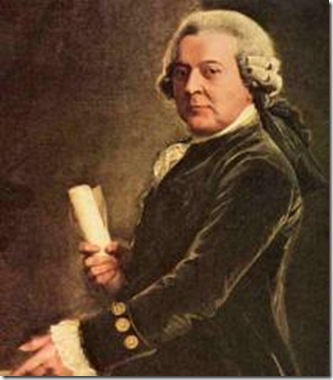
    For better or worse, whether in self-congratulation or deprecation, I can’t help but think of myself as Sam Adams in Seattle’s struggle to become a world class theatre town.  As folks are happy to point out, I have a knack for starting loud and unruly conversations; but Sam Adams, drunken loud-mouthed Tea Party-thrower that he was, was never well positioned to lead the colonies anywhere except into ever rowdier arguments.  In the end, he had to turn the struggle over to his betters and let them lead the cause. If I’m Sam Adams, then Jim Jewell is my cousin John: smarter, better informed, and better positioned to effect the change we need.

    Jim, the floor is yours.  Let facts be submitted to a candid world.

    John Adams

  • The Dream of the Black Soldier

    The Dream of the Black Soldier

    It is hard for me to imagine some future day when that day 67 years past will cease to captivate  human imagination.

    To all of the human beings whose fates were altered that day; in other words, to all of us: wherever we go, whatever we do, let us go and do it seeking peace, with the understanding that sometimes the world must be wrested back from those who would hold it in ignorance and malice.

      (…Louis opens his eyes and smiles at the audience, raising his arms out of the ice troughs like a prophet.)

    SLOTIN:  The time is come.

    DREAMER A:  It’s June the 6th, 1944.

    DREAMER B:  I’m in an amphibious landing craft headed straight for Omaha Beach.

    DREAMER A:  Normandy.

    SLOTIN:  Time is come. 

    DREAMER A:  As I look around at the other soldiers puking up their last rations–

    DREAMER B:  As the LC bounces across the channel’s heavy chop.

    SLOTIN: I realize a strange thing.

    BLACK SOLDIER:  I am a black man.

    SLOTIN:  I have always been black.

    DREAMER A:  From Arkansas maybe, or the Carolinas.

    DREAMER B:  I am the only Negro on this boat.

    BLACK SOLDIER:  Hell, I’m the only Negro in this entire invasion.

    DREAMER A:  And even with the shells lofting columns of sea and spray all around us. 

    DREAMER B:  And even with the shore looming closer and closer, and the thrill and terror pumping so thick I can taste it.

    DREAMER A:  I have to laugh.

    SLOTIN:  Because I realize there’s been some mistake:

    BLACK SOLDIER: This ain’t my war.

    DREAMER A:  The boat hits the beach. 

    DREAMER B: We can hear the bullets clanging on the other side of the steel landing ramp.

    DREAMER A:  And then down it drops.

    DREAMER B:  And we can see machine gun fire churning the water in front of us to a wall of froth.

    BLACK SOLDIER:  Ain’t nobody stepping into that.  But when I turn round, the Navy skipper’s pointing his sidearm Colt at us.  So what do we do but go?  White boys falling all around me.  Some cut to pieces by the guns, some just drowning under their gear.  But I move forward.  Kraut bullets just won’t hit me.  Ain’t my war.
          I got me a Browning automatic rifle and I start pumping her good into anything that moves up on them cliffs.  And then I’m up the cliffs.  I leave all them white boys behind dying and such down on the beach.  Ain’t got time for that.  Ain’t my war.  Every lousy Kraut blue-eyed bastard I find, I just jerk back on my B.A.R. and pump some lead in his face.
          “Damn, Fritz.  Sorry now, ain’t ya?  Should a thought a that sooner, hunh?  Now get down in hell where you belong.

    DREAMER A: And then I’m running.

    DREAMER B:  Running ahead.

    BLACK SOLDIER:  I ain’t got time for this.  This ain’t my war.

    SLOTIN:  I run past Paris.

    BLACK SOLDIER:  Sorry, Ladies.  Much as I’d like, ain’t no time for that now.

    DREAMER A:  I run forward.

    SLOTIN:  Past the Maginot line.

    DREAMER B:  Into Germany.

    BLACK SOLDIER: And I kill Krauts when I see ’em, but ain’t wasting no time neither.

    DREAMER A:  I’m running.

    DREAMER B:  Past Berlin.

    SLOTIN:  Past Hitler.

    BLACK SOLDIER:  Ain’t got time for that lousy little shit-ass now.  Let ’em eat his own lead.

    DREAMER A:  I’m running.

    DREAMER B:  I’m into Poland now.

    DREAMER A:  And then I’m there.

    SLOTIN:  Auschwitz.

    BLACK SOLDIER:  And damned if it don’t look just like “Gone With The Wind”.  Big ol’ plantation with big ol’ pearly white columns.  And who you think’s sitting up on that porch, just a-sipping on a julep but the Doctor himself.

    SLOTIN:  Mengele.

    DREAMER A:  Kill him.

    DREAMER B:  Kill him now.

    BLACK SOLDIER:  Yeah.  Now we got somebody worth killing.  I stroll on up them front steps drop my BAR from my shoulder and get set to shoot, only the gun ain’t a gun.  Just a damned stick.

    DREAMER A:  A yardstick.

    DREAMER B:  A slide rule the size of a yardstick.

    DREAMER A:  It’s hard to say.

    DREAMER B:  It’s all pretty hard to say.

    SLOTIN:  At any rate, Mengele smiles.  He gets up, and from his vest pocket draws a very small knife.

    DREAMER A:  A scalpel–

    BLACK SOLDIER: And cuts me open.

    SLOTIN:  To find the foolish Canadian Jew inside.

    BLACK SOLDIER & SLOTIN (together):  Louis.

    BLACK SOLDIER:  And right then and there it dawns on me–

    DREAMER A & DREAMER B (together):  We got trouble.

    (Blackout.)

    BLACK SOLDIER & SLOTIN (in darkness):  Louis… we need to talk, Louis.

    From Louis Slotin Sonata

  • Lost and Found

    Lost and Found

    Circle X Theatre’s world premiere of An American Book of the Dead – The Game Show, designed by Gary Smoot, was the most visually evocative production of any show I have ever written.   The tableaus and scenic effects were so unique and so profoundly stunning that it’s damned near impossible to describe them in words.  So imagine how depressing it has been these nine years to think that the only two surviving images of the show were this…

    And this…

    Kevin Fabian as Blink and the spokesmodels (Jamie Bullock & Daniele O'Loughlin) from the Circle X Theatre World Premiere of An American Book of the Dead- The Game Show.

    Now don’t get me wrong: the incomparable Kellie Waymire ravishes us posing above as the troubled proto-supermodel Jacqui Potts*; and Blink Bodie (Kevin Fabian) flanked by his spokesmodels (Jamie Bullock & Daniele O’Laughlin) wrapped in Old Glory certainly hits the “American” part of the title on the nose.  On the other hand, not only do both shots fail to tell us anything novel about the show, they also, more importantly, don’t tell us what we don’t know about it, thus piquing our curiousity enough to maybe come see.  Compare them with this newly unearthed shot, again of Kellie as Jacqui…

    Kellie Waymire as Jacqui Potts in the all together.

    This not only screams “sex”, but “mystery”, “exposure”, and somehow, oddly, “death” itself.  If we had captioned this “Jacqui Potts about to enter the bardo realm by dropping acid and posing nude for the first time”, we might just have been able to get your butt in one of Circle X’s seats, mightn’t we?   Why we did not try to sell the show with the countless more evocative images than those first two, I will probably never know.  The fact is, however, that because those two shots were used for publicity, they alone survived.  Or so I thought for nearly a decade.

    A lot of life got lived between 2002 and now, and the rolls of film that all of us knew were captured in that meticulous marathon photo call somehow disappeared  somewhere along the way.  I confirmed the loss when I started blogging here at Just Wrought and wanted to write about how I love to work with designers as early as possible in the development process.  Even though I was living in New York City when I wrote ABOD and Gary Smoot lived in Los Angeles, we somehow managed to meet in Seattle over a long post-9/11 Thanksgiving weekend, and in the living room of Gary’s boss’s house we brainstormed ways to stage the bizarre effects I was imagining.

    I described the process in my essay on designers:

    We needed three isolation booths for the afterlife contestants.  I wanted something straightforward and on the nose, similar to the glass boxes they used in Twenty-One.  Naturally, Gary zagged off my zig.  We went through a lot of ideas, including bubble packs for life-sized action heroes, file cabinets and morgue drawers.  Finally he landed on simple genius, and of course had the skill and the luck to bring it together:  three identical, perfectly white refrigerators, with plastic magnet letters to spell out each enclosed contestant’s name. When the intense gelled Fresnels were focused on them, the white surface utterly transformed into whatever deeply saturated color the lighting designer chose to call up.  The “contestents” blithely climbed in and out of them, emerging unexpectedly from one after entering another, like so many peas in a karmic shell game.  For the audience the layers of meaning dawned almost imperceptibly but no less forcefully for that: the three fridges were uniquely American icons of consumption, comfort, death and banality all at once, and as they were signifying these things, it was also obvious that they were nothing more or less than refrigerators, or isolation booths, or maybe some vast gentle joke played on everyone from patron to playwright.  When Gary’s designing the sense of play never leaves the play, even if the play involves death at its very core.

    When I wrote that I had no reason to believe anyone would ever again be able to see what I was trying to describe.  When I called Gary to ask if he had captured any photos for his own records, he said he might have, but that he would have to dig for them when he had some free time.  That’s Smoot code for, “It ain’t gonna happen.”  Gary never has free time.  Even so, a few months later he told me he had looked and hadn’t find anything.  Now we were both bummed.

    Then, a few months later, I was on the phone with Tim Wright, the current Artistic Director of Circle X, pitching him a new script when a mini-miracle occurred.  Tim casually mentioned that he had the ABOD production shot negatives and if I wanted, he would send them to me!  The rest was logistics.  This past week I got the negs developed to digital at a respectable mom and pop photo shop, and spent most of Saturday uploading the images to Flickr and Face Book and tagging them with the names of old friends.*    I smiled all day as folks involved with the production chimed in to say hello, share memories,tag more photos and grab shots for the profile pics.

    So you wanna see those fridges, and how well they worked?  Well, in lieu of a few thousand words, here’s a few pictures…

     Barry goes into the isolation booth Tommy Hennessy mourns  Surge gets a Karma inversion Tanya squares off with Surge

     The Rat Pack in the Bardo of Louie Prima 4

    *Deep inside information:  It is a testament to Kellie’s wide-spectrum of talent and tireless dedication that she also helped to sew and hang the sumptuous red curtain behind her in this shot.

    Not to mention death: Kellie Waymire died in 2003.

    *You can enjoy the full set on Flickr, here… 

    Available Now
    image
    imageBuy Now
  • What is Going on in this Pic?

    What is Going on in this Pic?

    Gee I wish I could tell you, but then you might think you don’t need to come to The New New News: A Living Newspaper, and that would be so so wrong.  Because you do need to come.  We open FRIDAY!  Book your reservation now so you you too can get a taste.

  • NewsWrights Reads WikiLeaks

    NewsWrights Reads WikiLeaks

    If this be treason, make the most of it!
    Patrick Henry

    A couple weeks ago— though it seems like half a year in this hyper-speed news cycle that Julian Assange and WikiLeaks have helped spin even faster— incoming Tea Party Congressman, Allen West stated publically that he not only considered Assange’s decision to leak classified State Department cables to be an act of treason, but equally treasonous the  further dissemination of  the leaks by any news agency in the country.  He baldly called for American news outlets to be censored for running stories based on the WikiLeaks’ cable dump.  [Read more here.]  Then later Allen back-tracked and said, “I didn’t say ‘censored.’  I said ‘censured.’”

    Last Sunday evening, while the Seahawks staggered to their NFC West Championship win, NewsWrights United’s Wes Andrews led five other theatre artists: Jose Amador, Llysa Holland, Spike Friedman, Ramon Esquivel and Josh Parks, in publically reading excerpts of the leaked cables at Annex Theatre in Seattle’s Capitol Hill neighborhood.  Personally, I was proud to be in the audience participating at least vicariously in what the blow-hard Tea Bagging demagogic moron, Allen West, considers sedition.

    The excerpts the actors chose to share originated from consulates spanning the globe from Venezuela to Iran, and included both inspiring stories of personal heroism to gossip about absurdly profligate parties thrown by quasi-governmental gangsters in the Caucasus [see here].  Perhaps the most striking feature of these communiqués is the remarkably consistent quality of writing: far better, far more cleanly evocative than most of what passes for journalism these days.  Apparently the authors, diplomats spread across the globe, all consider themselves members of a secret elite club who compete to impress each other with their wry yarns spun from foreign adventure.

    While the events described vary widely, one theme came clearly through each of the cables read Sunday night.  People in other countries care deeply about the United States of America.  No, they don’t love us, perhaps don’t even respect us.  But they care what we do and what we think.  A lot.  And those of them that hate and/or fear us don’t do so because of our aggression and our imperialism.  These crass aspects of Americanism are the ones they actually understand and abide, and even hope to emulate.  No, it is our blithe and breezy free-thinking, our defiance of authority, our belief in the individual and his or her right to express themselves openly— in a word our liberalism—  that that they fear, as these cables give evidence time and time again.

    One of the notes I jotted to myself while listening to these classified cables being read was “Theatre is inherently subversive.”  In a digital world, the simple act of consuming your art or your journalism off the electron grid qualifies as low-grade sedition.  Adding leaked classified documents as source material serves to spike the punch to an intoxicating level.  Tom Paine would recognize this work as what it plainly is: a tiny tune-up of world democracy.  It was theatre like this that gave birth to the Czech Republic.  No one person can ever fully comprehend or appreciate the enormity and the pervasiveness of its power.  But you can catch a glimpse.  And so I did, Sunday night.  NewsWrights United  currently plans to stage more of these WikiLeaks offerings, I’ll be sure to let you know so you can catch one too, and share the delicious sedition-steeped fun.  (Thought to be certain you keep current on NewsWright United’s doings, you should “like” us at Face Book.)

    Long live the United States of America.  And long live the blend of art and the treason that makes her rise, often against her own mendacious, mediocre volition, to her best.

  • Chicago Posts: Dead and Alive

    Three nights ago my old friend Louis Slotin and I each got one of those chances that only theatre can offer.  He got to be alive while I got to be dead.

    Everybody loves a dead playwright.  The deader the better.  Living ones are prickly and unpredictable.  Actors and directors assume, sometimes rightly, that living playwrights have special insight into their plays because, well, they wrote them.  Such insight can be resented as often as welcomed.  Rehearsing a play is a process of discovery.  No one wants to do an Easter egg hunt with someone they suspect knows where all the eggs are hidden.  Smart playwrights understand when it’s time to walk out of the rehearsal hall so everyone else can breathe a little.  They do this even though they know that they do not in fact have all the answers and really might like to stay and hunt for a little treasure too.  In other words, a smart playwright knows when to roll over and play dead.

    As I confessed in an earlier essay installment of these Chicago Posts, I have seen every full production of every play I have ever written.  Often I have been part of the development process, even if the play has already had its world premiere.  For Louis Slotin Sonata’s second production which was staged off–Broadway at Ensemble Studio Theatre I rewrote substantially, adding at least one scene, which I would later cut.  I was living in New York at the time, so I could attend as many rehearsals as I wanted (and thought wise.)  The same was true for the third production at the now dead Empty Space Theatre.  By then I had moved to Seattle with my wife and kids and was able to work with the director, John Langs, to touch up the script, and most importantly, completely swap out the second act song, replacing it with the utterly original “Sodom Saki Shuffle” for which I wrote all new lyrics which the incomparable Mark Nichols then brilliantly scored.  (Click this to hear the Seattle version of the Sodom Saki Shuffle.)

    For this fourth production of the play at A Red Orchid Theatre in Chicago , I had nearly zero input.  I answered a few small script questions via email from the director Karen Kessler, but otherwise I really might as well have been blissfully departed.  So I had no idea what I was in for when showed up at the storefront theatre in Old Town two nights ago.  I have sat through productions I had nothing to do with that blew me away with their unforeseen brilliant interpretation of my script, and I have sat through shows so awful, so utterly antithetical to the play I imagined that I was struck quite literally catatonic with horror, rage and shame.

    Louis Slotin was just about to leave Los Alamos when he had his accident.  His bags were packed.  He was showing the “crit test” to Alvin Graves, his replacement at Pajarito Canyon labs.  The next day he planned to fly out to the South Pacific to see the Navy explode the very plutonium core he held in his hands.  From there he would head to the University of Chicago to continue his studies in his original field of biology.  Of course, Slotin never made it to Chicago.  He never made it out of Los Alamos alive.  They put his radiation-ravaged body in a lead-lined casket and shipped it to Winnipeg, Manitoba, his hometown.

    Two nights ago I saw Louis Slotin alive in Chicago.  He was occupying the body of an actor named Steven Schine, who through happy happenstance looks a hell of a lot like him.  I watched as that long-ago dead man was forced to, via long distance phone call, break the news in Yiddish to his father Israel Slotin that he was dying.  Israel was inhabiting the body of an eminently accomplished veteran Chicago actor named William J. Norris.

    I watched those men relive a pain that no one should even have to live through once.  I watched and I wept.  But I also felt a great strange satisfaction.  After 64 years Louie had arrived where he was going.

    Maybe I should play dead more often.

  • Steve Schine Joins a Very Exclusive Club

    Steve Schine Joins a Very Exclusive Club

    Gotta say, my Chicago home boy, Steve Schine, is practically a dead ringer.  Don’t ya think?

    Compare with . . . Louis Slotin in his Los Alamos mug shot

    No dis,  mind you, on my former Slotin homeboys, the inestimable Paul Morgan Stetler (The Empty Space Theatre, Seattle) and the seminal William Salyers (Circle X Theatre, Los Angeles and Ensemble Studio Theatre, New York).

    Paul Morgan Stetler as Hollywood SlotinWilliam Salyers as Louis Slotin as Joey Mengele