Just Wrought

Recovering playwright, once won a STRANGER Genius Award for theater. Now writing a bloated novel about… G-d help me! Theatre.

Category: Seattle

  • The Seattle Rep Offers Us Locals a Little Love

    The Seattle Rep Offers Us Locals a Little Love

    I wrote recently that there are three kinds of playwrights in this town.  Those ardently dedicated to the continuing existence of Seattle’s large regional theatres despite decades of neglect by those Big Houses.  Those, like Louis Broome, who could not care less and would even prefer to see them all go out of business so a healthier model can take their place, (though in fairness, Louis has been tellingly vague on exactly what that model might be.)  And those, like myself, who have at long last decided to make our caring contingent on getting a little love in return.

    Well, I have to call ‘em as I see ‘em, and it sure does seem like the Rep has just offered us a little love, announcing a week-long summer residency for two full-length plays (two writers, two directors and ten actors) and a solo work.  Hit this link for the details:

    http://mail.tmsmail.us/bin/display_msg?id=B6CCE57E73813BE308C4B50A80B531126161775AB5955202 

    The wording is artfully vague, but it certainly sounds as if the Rep has reserved at least one of these slots for a Pacific Northwest playwright. 

    My good friend and fellow playwright, Scot Augustson often wonders aloud to me why I even bother tangling with the Big Houses.  “Is the regional theater stage the end-all be-all?” he asks.  “Is it really the best for all plays and playwrights?”

    No.  I do not think it is.  Certainly my play The Ten Thousand Things premiered in a perfect place for it, the 40-seat Little Theatre that Washington Ensemble Theatre calls home.  The intimacy and rawness of that space made it feel like you were part of, not just observing, Etta Lilienthal’s simultaneously earthy and ethereal design. 

    On the other hand, a play of mine like Louis Slotin Sonata simply could not fit in so small a venue.  And now that I mention it, I recall that the Sonata owes its existence to a new play development program ACT hosted over a decade and half ago, called FirstACT.  A two-week program that matched four local playwrights to local directors and actors and hosted the resulting staged readings for the public.  Not surprisingly, ACT put a bullet in FirstACT long ago: an early sacrifice to the budget woes that they now seem to have finally put behind them.  (Time to bring it back, ACT, and fund it in a less precarious way?)

    My response to this news from the Rep is simple and selfish.  I have a farce that needs working on.  I need to get it on its feet and see how the frenzied action flows.  So I will be dropping the script off with Braden, though, after all the recent grief I have given him, I could understand if he is tempted to toss it in the recycle bin unread.  Oh, and the curmudgeonly Mr. Augustson?  He is sending something in too:

    Yes yes, I’m going to submit something to Braden’s Summer Bellingham. And yes, you can quote me. But, if asked: I am not anti-big guy institutional theater. I just get tired of them being thought of as the only game in town. In other art forms there seems to be more of a respect for a spectrum of scales. And of course, I’m show folk at heart and wouldn’t dream of not kissing some serious ass to get at their budgets and their marketing departments.

    It is almost certainly too much to hope that both slots would go to local writers, just as it is unlikely that either Scot or I will land one, given how much writing talent exists here, and less abrasive too; but at least now I have a frame to fantasize around: a week in beautiful summer Bellingham, my friend and fellow playwright Scot Augustson is there.  We work hard on already strong local scripts.  We push ourselves.  We push each other.  The directors, the actors, all of us push.  We make each other great.

    As the city 90 miles to the South moves a little bit closer to world class.

  • Who should go to the OUTRAGEOUS FORTUNE Discussion? Playwrights

    Just the other day I was messaging back and forth with another Seattle playwright about an email I got back from a high level administrator at one of Seattle’s Big Houses.  I could not be sure, but it certainly seemed like the administrator’s reply to my question had been artfully edged with venom.  I told my playwright friend I hoped it was, since that might offer some small sign that this particular individual was not quite as oblivious as we local writers imagined.  My colleague replied.  “Sometimes I just hate the game.”

    I understand this sentiment.  Given that, as currently played, the game is heavily handicapped against locally grown works, it is easy to hate.  But hate leaves the enlightened human very little choice.  There is no healthy way to embrace hate, you can only let it go. Thus “letting the game go” becomes the noble path.

    The entrenched powers expect local playwrights to hate the game. They count on it.  They prefer us marginalized, embittered and powerless.  Once there, they hope we make the “noble” choice and let the hateful game go, liberating ourselves to live happy lives as enlightened, and most importantly, quiet ex-artists.  As for audiences, other theatre artists, funders and boards of directors, the putative artistic leadership  in Seattle would have them believe the game simply does not exist.  “Things are as they are, as they have been, as they ever will be, because there is no other way.”  The last thing the entrenched administrators want is for local playwrights to play the game, to play it well, and by playing, change it.  Let me repeat that point, for emphasis and clarity: the Big Houses do not want to this game to change.  They like their jobs.  They want their jobs to exist exactly as they exist right now until they choose to retire or move on.  Their standing strategy is attrition.  Play long enough and the opposition will abandon the board.

    I am not ready to leave.  I honestly do not think my friend is either.  But playwrights are a funny bunch.  We straddle two realms, the lone wolf world of solitary authorship and the messy melee of creative theatrical collaboration.  We are naturally suspicious of “group think” and “movements.”   We instinctively scorn politics and dream of an ideal world where local theaters consider our plays on the merits.  Would it were so, but “so” it is not.  The time has come to admit that even lone wolves hunt better as a band.

    Fellow playwrights, this is happening.  This game is getting played.  Over the past few months, partly because of this book, Outrageous Fortune, people are talking about playwrights, new plays and “locally grown” in ways that they never have before.  The discussion will continue live and unscripted on March 1 at the Center Houses Theatre.  Big gambits are opening on the board, and while we playwrights may be many moves behind, we still have our queen, creativity.

    Theatre Puget Sound hosts
    Outrageous Fortune
    March 1, 2010
    9AM – 1PM

    Detail: 9am – 10:30 Presentation by author Todd London

    Break – snacks
    10:40 – 12:00pm Q & A in large group
    Break – lunch type snacks
    12:10 – 1pm small group breakouts and report back

    Center House Theatre

    rsvp: TDFRSVP@tpsonline.org

    Theatre Development Fund, the national service organization, is convening a meeting of playwrights, artistic directors, funders, theatre managers and others in conjunction with Theatre Puget Sound at the Center House Theater in Seattle on March 1, 2010 from 9:00am-1:00pm to stimulate conversation and action to support new American play production. Tory Bailey, executive director of Theatre Development Fund, Todd London, artistic director of New Dramatists, and co-author Ben Pesner will lead the gathering, which will begin with a presentation of the results of an intensive study of new play production in America and then open out to an inclusive conversation.

    TDF has just released the book OUTRAGEOUS FORTUNE: THE LIFE AND TIMES OF THE NEW AMERICAN PLAY written by Todd London and Ben Pesner, with research consultant Zannie Giraud Voss. The book, drawing on six years of research, examines the lives and livelihoods of American playwrights today and the realities of new play production from the perspective of both playwrights and not-for-profit theatres. The study represents the most comprehensive field study in the history of the not-for-profit theatre to analyze new play production practices and the economics and culture of playwriting in America. Set against a backdrop of dwindling audiences for dramatic work, OUTRAGEOUS FORTUNE: THE LIFE AND TIMES OF THE NEW AMERICAN PLAY makes clear the urgent need for new conversations and practices if the American play is to flourish.

    The March 1 meeting will share the study findings and facilitate the beginning of a conversation in which participants can identify possible ways to improve conditions for the production of new American plays, community by community. We hope that a wide group of individuals from the theatre community in the Seattle area will join this conversation.

  • Who should go to the OUTRAGEOUS FORTUNE Discussion? Anyone Who Has a Full-Time Permanent Job at a Seattle Regional Theater

    Who should go to the OUTRAGEOUS FORTUNE Discussion? Anyone Who Has a Full-Time Permanent Job at a Seattle Regional Theater

    Hypothetical: if my actions made it plain to you that I neither knew nor cared that you existed, would it be rude, or perhaps just presumptuous, for me then to insist that you care deeply if I died? Or would it just be weird?

    Essentially this is the position that Seattle’s regional theaters put me and every single one of my local but nationally known playwrighting colleagues. “You have to understand,” say good friends of mine working at the Big Houses. “We are simply trying to survive here. Surely, you don’t want to see us go out of business. Surely that wouldn’t help your career as a playwright.”

    Surely not.

    Let me state categorically that I do not want to see any of Seattle’s Big Houses go out of business. (My play Louis Slotin Sonata was the Empty Space’s last production before being killed by its board, so I have a deep and personal understanding of the pain such an irrevocable loss can inflict.) Let me state further that I understand that such a catastrophe would surely not help my career as playwright. Here’s the problem. Would it hurt?

    Probably not.

    If I have seemed at times radical or outrageous in my banging on the Big Houses, let me assure you, gentle reader, that among my nationally known local playwright colleagues I am, in fact, a moderate voice.  Allow me to introduce to you, if you do not already know him (and sadly I fear that the artistic leaders at all of the Seattle’s Big Houses suffer from this specific ignorance), Louis Broome, author of the Ovation Award-winning Texarkana Waltz.

    This is from his recent blog reviewing Outrageous Fortune.

    If the tax-exempt laws that have sickened theater were repealed, the very next day almost all of the theaters would shut down and a bunch of administrators would be out of work. The players – the actors, playwrights, designers and directors, who were already out of work most of the time anyway – would no longer have the theaters to blame for their sorry state. They would have to either give up the theater and get day jobs, or figure out a way to make theater pay the rent.

    I love Louis. I love that he is part of this conversation. I see a lot of holes in Louis’s broader manifesto, i.e. all theatre must be for profit. But I am not prepared to wager he will not fill them in time and with cunning. I am dubious of and vaguely bored with his calls for revolution. But I half-wonder if this is not just my own personal aversion to that word. Others, younger and less jaded, will not necessarily share this particular semantic qualm. Louis stands as a healthy reminder, for anyone who cares to listen, of just how broken the theatre has become and just how frustrated we playwrights are with the administrative machines that have knowingly continued down a path they can see leads nowhere, all the while warning us artists not to say anything negative less we hasten their demise.

    So you see, we playwrights run a spectrum. Some care deeply and unconditionally that the Big Houses exist. Some, like Louis, could not care less. And some of us, like myself, have decided at long last to make our caring contingent on getting a little love in return. So show us you care, you happy few who make your living off this thing of ours. Show up on Monday, March 1. It will mean a lot to us. And we have long memories.

    Theatre Puget Sound hosts
    Outrageous Fortune
    March 1, 2010
    9AM – 1PM

    Detail: 9am – 10:30 Presentation by author Todd London

    Break – snacks
    10:40 – 12:00pm Q & A in large group
    Break – lunch type snacks
    12:10 – 1pm small group breakouts and report back

    Center House Theatre

    rsvp: TDFRSVP@tpsonline.org

    Theatre Development Fund, the national service organization, is convening a meeting of playwrights, artistic directors, funders, theatre managers and others in conjunction with Theatre Puget Sound at the Center House Theater in Seattle on March 1, 2010 from 9:00am-1:00pm to stimulate conversation and action to support new American play production. Tory Bailey, executive director of Theatre Development Fund, Todd London, artistic director of New Dramatists, and co-author Ben Pesner will lead the gathering, which will begin with a presentation of the results of an intensive study of new play production in America and then open out to an inclusive conversation.

    TDF has just released the book OUTRAGEOUS FORTUNE: THE LIFE AND TIMES OF THE NEW AMERICAN PLAY written by Todd London and Ben Pesner, with research consultant Zannie Giraud Voss. The book, drawing on six years of research, examines the lives and livelihoods of American playwrights today and
    the realities of new play production from the perspective of both playwrights and not-for-profit theatres. The study represents the most comprehensive field study in the history of the not-for-profit theatre to analyze new play production practices and the economics and culture of playwriting in America. Set against a backdrop of dwindling audiences for dramatic work, OUTRAGEOUS FORTUNE: THE LIFE AND TIMES OF THE NEW AMERICAN PLAY makes clear the urgent need for new conversations and practices if the American play is to flourish.

    The March 1 meeting will share the study findings and facilitate the beginning of a conversation in which participants can identify possible ways to improve conditions for the production of new American plays, community by community. We hope that a wide group of individuals from the theatre community in the Seattle area will join this conversation.

  • Who should go to the OUTRAGEOUS FORTUNE Discussion? Marketing & Publicity Managers

    I have been scanning through the minutes of the recent San Francisco discussion of Outrageous Fortune, blogged in real time here by Karen McKevitt.  There’s a lot of great stuff, but this particular nugget leapt out at me.

    [Question:]  “When a movie is produced, they market it to an audience, not the audience.  It seems if you did the former, you’d expand audiences.”

    [Answer:] “On the subject of marketing and [audience development], it describes a feeling from playwrights that theatres aren’t doing it successfully.  The theatres know this, but have fallen into a bind of subscription season.  But playwrights also say that marketing departments [don’t] want to hear from them about how to market their play, unless they’re a playwright of color.  Playwrights haven’t been part of the larger conversation about audience development.”

    Marketing and publicity managers stand at a crucial and fatally overlooked nexus of original theatrical endeavor and its potential audiences.  We need eager ambitious innovative thought leaders excelling in these roles.   (You would think that bigger theaters might be able to poach some young people who are just entering the job market having studied these disciplines and hitting the wall finding their dream position in the current depression.) 

    Publicity and marketing departments do need to be much more willing to collaborate with playwrights to brainstorm ways to reach and bring in new audiences for locally grown new plays, but perhaps more importantly, playwrights need to be equally willing to get their hands dirty doing  some bona fide promotion.  Heck, we might even deign to consider writing plays based on what audiences want instead of whatever brilliant obscure idea we have been obsessing over for a decade.  (This admonishment comes, mind you, from the guy who wrote about Frank Sinatra, the Chinese Massacre at Rocks Springs, and IBM’s existence as a corporate person all in the same over-wrought, self-indulgent and quintessentially wonderful play.)

    If you are involved in marketing , publicity or public relations for a local theater, please come on March 1 (details below, RSVP to guarantee a seat).  We need your insights.  And if do not work in those areas, but you just have brilliant ideas on how to promote theatre, please come as well, because I want to hear them.  (And possibly steal them.)

    Theatre Puget Sound hosts
    Outrageous Fortune
    March 1, 2010
    9AM – 1PM

    Detail: 9am – 10:30 Presentation by author Todd London

    Break – snacks
    10:40 – 12:00pm Q & A in large group
    Break – lunch type snacks
    12:10 – 1pm small group breakouts and report back

    Center House Theatre

    rsvp: TDFRSVP@tpsonline.org

    Theatre Development Fund, the national service organization, is convening a meeting of playwrights, artistic directors, funders, theatre managers and others in conjunction with Theatre Puget Sound at the Center House Theater in Seattle on March 1, 2010 from 9:00am-1:00pm to stimulate conversation and action to support new American play production. Tory Bailey, executive director of Theatre Development Fund, Todd London, artistic director of New Dramatists, and co-author Ben Pesner will lead the gathering, which will begin with a presentation of the results of an intensive study of new play production in America and then open out to an inclusive conversation.

    TDF has just released the book OUTRAGEOUS FORTUNE: THE LIFE AND TIMES OF THE NEW AMERICAN PLAY written by Todd London and Ben Pesner, with research consultant Zannie Giraud Voss. The book, drawing on six years of research, examines the lives and livelihoods of American playwrights today and the realities of new play production from the perspective of both playwrights and not-for-profit theatres. The study represents the most comprehensive field study in the history of the not-for-profit theatre to analyze new play production practices and the economics and culture of playwriting in America. Set against a backdrop of dwindling audiences for dramatic work, OUTRAGEOUS FORTUNE: THE LIFE AND TIMES OF THE NEW AMERICAN PLAY makes clear the urgent need for new conversations and practices if the American play is to flourish.

    The March 1 meeting will share the study findings and facilitate the beginning of a conversation in which participants can identify possible ways to improve conditions for the production of new American plays, community by community. We hope that a wide group of individuals from the theatre community in the Seattle area will join this conversation.

  • Who should go to the OUTRAGEOUS FORTUNE Discussion? Stagehands

    Who should go to the OUTRAGEOUS FORTUNE Discussion? Stagehands

    Pretty much everyone connected with Seattle theatre knows something about its dirty little secret: the stage actors union, Actors Equity of America (or just “Equity”) refuses to grant Seattle the same kind of showcase contracts, readily available in Los Angeles, New York and Chicago, that allow union actors to work for free in very small theatres (99-seats or less).  But there is another theatrical union that, like Equity, is run from big market cities thousands of miles way, with, like Equity, near zero regard for the particular needs and aspirations of local theatre artists. The International Alliance of Theatrical Stage Employees (IATSE) (known to show folks as “Eye Yatzee”) represents the stagehands who run the shows at the big houses in Seattle.  Because of IATSE, my favorite venue in this town has been relegated to a pitiful existence as a glorified rehearsal hall.

    Before Dan Sullivan had built, at his personal behest and to his narrowly focused Broadway launching pad specifications, the crappy toy proscenium known a The Leo K Theater, the Seattle Rep had a different second space where you could see glorious world premiere productions like The Cider House Rules – Part I.  I speak with awe and ardor of a warm, open, bare bones black box called the PONCHO Forum.

    With the magic number of 99 seats, the PONCHO is the perfect space for developing locally grown new plays.  But IATSE requires that two members get full scale wages whenever it is used for performance.  So the labor costs of merely turning the lights on effectively obliterate any potential revenue.  Thus, by demanding two union jobs, IATSE gets zero.  And Seattle gets zero production use out of the perfectly useful PONCHO.

    There is no reason to believe IATSE members actually give a damn about developing new work in Seattle, or that they ever will.  Actually, they get fatter from the big Broadway touring shows offered at the Paramount, Fifth Avenue, and increasingly–and to their increasing shame– big houses like Intiman, which last year imported an Othello whole cloth from New York instead of hiring the actors locally.

    After 25 years as a theatre professional, I understand that stage hands cannot be begged, cajoled or threatened.  They can, however, be bribed.  So, if you are an IATSE member and you come to this discussion of Outrageous Fortune, simply show me your current union card and after the discussion I will personally walk you to the Lower Queen Anne bar of your choosing where the first round will be on me.  Maybe over that drink you can explain to me how keeping the PONCHO dark makes anything better.

    Theatre Puget Sound hosts
    Outrageous Fortune
    March 1, 2010
    9AM – 1PM

    Detail: 9am – 10:30 Presentation by author Todd London

    Break – snacks
    10:40 – 12:00pm Q & A in large group
    Break – lunch type snacks
    12:10 – 1pm small group breakouts and report back

    Center House Theatre

    rsvp: TDFRSVP@tpsonline.org

    Theatre Development Fund, the national service organization, is convening a meeting of playwrights, artistic directors, funders, theatre managers and others in conjunction with Theatre Puget Sound at the Center House Theater in Seattle on March 1, 2010 from 9:00am-1:00pm to stimulate conversation and action to support new American play production. Tory Bailey, executive director of Theatre Development Fund, Todd London, artistic director of New Dramatists, and co-author Ben Pesner will lead the gathering, which will begin with a presentation of the results of an intensive study of new play production in America and then open out to an inclusive conversation.

    TDF has just released the book OUTRAGEOUS FORTUNE: THE LIFE AND TIMES OF THE NEW AMERICAN PLAY written by Todd London and Ben Pesner, with research consultant Zannie Giraud Voss. The book, drawing on six years of research, examines the lives and livelihoods of American playwrights today and the realities of new play production from the perspective of both playwrights and not-for-profit theatres. The study represents the most comprehensive field study in the history of the not-for-profit theatre to analyze new play production practices and the economics and culture of playwriting in America. Set against a backdrop of dwindling audiences for dramatic work, OUTRAGEOUS FORTUNE: THE LIFE AND TIMES OF THE NEW AMERICAN PLAY makes clear the urgent need for new conversations and practices if the American play is to flourish.

    The March 1 meeting will share the study findings and facilitate the beginning of a conversation in which participants can identify possible ways to improve conditions for the production of new American plays, community by community. We hope that a wide group of individuals from the theatre community in the Seattle area will join this conversation.

  • Who should go to the OUTRAGEOUS FORTUNE Discussion? Theatre-Goers

    As I walk backwards up through the list of those who need to come to the March 1 discussion of Outrageous Fortune, I see that it is time to talk about audiences.  Frankly, for theatre makers, it should never not be time to talk about audiences,  but anyone who knows this business knows that one of its dirty little secrets is how often we relegate our customers’ needs and desires to the far back seats of the balcony, while we place our own craving for idiosyncratic expression square in the down center hot spot.

    All of the current arguments about the questionable health of theatre and the debatable need for new plays have the audience silently lurking at the bottom of them, waiting for some bold conclusions and and bold new steps.  Are we serving them?  Have we lost them forever?  Is there a way to express ourselves without tossing them out with the masturbatory bath water? 

    We do a lot of self-back-patting in the theatre.  “What I Did for Love” and other auto-congratulatory paeans to our sacrifices as show people make for popular pabulum;  but honestly, self-love is not—has never been— enough.  If we ever want them to come back with the enthusiasm and loyalty capable of sustaining a long drive towards world class theatre, then we  need to show audiences a love greater, more encompassing than the love we have for own own voices and our damnable phantom “living wage.”

    So, if you are a Seattle theatre-goer, let me first apologize for our art form’s pernicious self-involvement.  It is an occupational hazard, of course, but there is still no enduring excuse for it.  You really are the most important component of what we do.  And if you are even half as concerned or curious about the health of theatre in Seattle as we are, then please come to this event.  Listen, and better yet, chime in.  We need to understand your needs more clearly in order to better serve you.

    Theatre Puget Sound hosts
    Outrageous Fortune
    March 1, 2010
    9AM – 1PM

    Detail: 9am – 10:30 Presentation by author Todd London

    Break – snacks
    10:40 – 12:00pm Q & A in large group
    Break – lunch type snacks
    12:10 – 1pm small group breakouts and report back

    Center House Theatre

    rsvp: TDFRSVP@tpsonline.org

    Theatre Development Fund, the national service organization, is convening a meeting of playwrights, artistic directors, funders, theatre managers and others in conjunction with Theatre Puget Sound at the Center House Theater in Seattle on March 1, 2010 from 9:00am-1:00pm to stimulate conversation and action to support new American play production. Tory Bailey, executive director of Theatre Development Fund, Todd London, artistic director of New Dramatists, and co-author Ben Pesner will lead the gathering, which will begin with a presentation of the results of an intensive study of new play production in America and then open out to an inclusive conversation.

    TDF has just released the book OUTRAGEOUS FORTUNE: THE LIFE AND TIMES OF THE NEW AMERICAN PLAY written by Todd London and Ben Pesner, with research consultant Zannie Giraud Voss. The book, drawing on six years of research, examines the lives and livelihoods of American playwrights today and the realities of new play production from the perspective of both playwrights and not-for-profit theatres. The study represents the most comprehensive field study in the history of the not-for-profit theatre to analyze new play production practices and the economics and culture of playwriting in America. Set against a backdrop of dwindling audiences for dramatic work, OUTRAGEOUS FORTUNE: THE LIFE AND TIMES OF THE NEW AMERICAN PLAY makes clear the urgent need for new conversations and practices if the American play is to flourish.

    The March 1 meeting will share the study findings and facilitate the beginning of a conversation in which participants can identify possible ways to improve conditions for the production of new American plays, community by community. We hope that a wide group of individuals from the theatre community in the Seattle area will join this conversation.

  • Celebrate Valentine’s Day with The Don Juan Cult

    Celebrate Valentine’s Day with The Don Juan Cult

    1995.

    Seattle hadn’t changed yet. The wave was cresting, but no one was really sure if it would break, or how to surf it when it did. Cobain had already blown himself away, but that seemed more like part of the times than an end to them. Hell, Pearl Jam was still putting out good albums. The Kingdome still stood and Sweet Lou Piniella still threw the best tantrums since Earl Weaver in it. The Stranger was only mildly annoying, and everyone only read the “I Saw You’s” and “Hey Faggot” anyway. The Honey Bear in Wallingford still baked the best blueberry scones anywhere. Fremont didn’t suck. And the greatest interior space that ever existed, the 211 Pool Hall in Belltown, had not yet been utterly burned out by some idiot’s electrical fire.

    I was still single, still drinking, childless– as far as I knew– and pretty damned convinced I was happy…. But what the fuck did I know?

    1995 was when I first met Jonathan. I can’t say whether I immediately despised him… but… it was close.

    Just in time for St. Valentine’s Day, Kindle has slashed in half the price of  The Don Juan Cult Concerto.  So now you can have my love letter to Rainsville’s fervent 90’s for the incredible price of just $3.99.

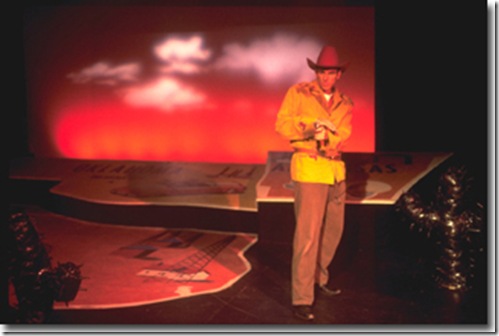
    Dueling monologues by Les (Mathew Suhr) and Jonathan (Colin Campbell).

    About The Play

    Les Newman’s half-brother Jonathan is in Seattle to compose a concerto inspired by the legendary Don Juan, but it seems he’d rather study the arts of seduction than actually write the score. Meanwhile, Les is too busy getting his own heart broken to pay much attention as the eager composer zeroes in on his ultimate challenge: a reticent receptionist with a savagely sad secret of her own.

    THE DON JUAN CULT CONCERTO explores the often brutal— often brutally hilarious— territory of unbridled romantic rapacity, as two men and three women each come separately to a single inevitable conclusion: no matter how you see yourself— predator or prey— you are, like it or not, always and forever, a member of the cult.

  • OUTRAGEOUS FORTUNE: Who Needs to Go?

    As I hope you may know already, an important book just came out called Outrageous Fortune: The Life and Times of the New American Play, and the authors will be making a discussion stop in Seattle on the morning of March 1.   The book has already sparked huge debate here and across the nation about the role of playwrights in the ecology of a thriving theatre.  This event and this book are only the beginning of a larger discussion that will bring us a new, more vibrant, more relevant and more popular theatre in this city.   Don’t believe me?  Come in a few Mondays from now and tell me in person how I’m wrong.  (Just don’t interrupt the nice authors from out of town to do it.  They might not understand how much we Seattle show people  like to scream at each other in public.)

    Below is a list of the kinds of Northwesterners I think would greatly benefit from joining this discussion, and in turn– and more importantly– greatly benefit the discussion with their input.  

    Directors

    Theatre Critics

    Designers

    Managing Directors

    Development Directors

    Over the next couple weeks I will drill down on some of these disciplines and explain why I think they should be represented on March 1 . But looking at the list, I think I will turn it upside down and go in that order.  It is the folks who  do not immediately see themselves as crucial to this debate that I want to convince very much are.

    Here’s the info in case you missed it before:

    Theatre Puget Sound hosts
    Outrageous Fortune
    March 1, 2010
    9AM – 1PM

    Detail: 9am – 10:30 Presentation by author Todd London

    Break – snacks
    10:40 – 12:00pm Q & A in large group
    Break – lunch type snacks
    12:10 – 1pm small group breakouts and report back

    Center House Theatre

    rsvp: TDFRSVP@tpsonline.org

  • Who should go to the OUTRAGEOUS FORTUNE Discussion? Board Members

    As pledged, I am walking upside-down through the list I posted earlier of those whom I think should show up to the March 1 public discussion of the incendiary new treatise, Outrageous Fortune.  Today’s pick: boards of directors.

    Over-generalizing, Seattle theatre artists are neither overly fond nor trusting of the people who sit on the boards at performing arts institutions in this town.  The larger the house, the stingier the trust.  Can you blame us?  We watched while the board at the Empty Space killed that 40-year old institution over a $70,000 debt.  We reeled helplessly when Giant Magnet’s board summarily fired Artistic Director Andrea Wagner without so much as an explanation.  We blinked in dumbfounded deference when the board at Intiman signed off on Bart Sher’s hand-picking his New York-based  successor without so much as a conversation with any of us, the artists who live here. 

    What we understand with painful clarity is that these boards hold the ultimate power of life or death over our not-for-profit theaters,  plus the power of hired or fired over the leaders who run them; and yet we really understand very little about how they function or why.  I myself regret the fact that while I am familiar with nearly every theatre artist who has been working for more than a few years in this small town,  I do not personally know a single board member at any of Seattle’s Big Houses.  And even more chillingly, I have a feeling damned few of them know me or my work.  I plan on changing that, because I have started to believe that the boards will play a key role in making Seattle theatre world class.

    So, in the extremely unlikely event that you are a reading this and you sit on the board of one of Seattle’s many theaters, please consider attending the event described below.   Come, listen, talk, and then decide whether you agree that locally grown new works fulfill an integral role in a healthy theatre ecology.  Or conversely, help me understand why keeping your distance from artists like myself is actually a better idea.  For my part,  I would love to personally say hello, shake your hand, and introduce you to some of the rest of the artists who make the the existence of the institutions you oversee possible.

    Theatre Puget Sound hosts
    Outrageous Fortune
    March 1, 2010
    9AM – 1PM

    Detail: 9am – 10:30 Presentation by author Todd London

    Break – snacks
    10:40 – 12:00pm Q & A in large group
    Break – lunch type snacks
    12:10 – 1pm small group breakouts and report back

    Center House Theatre

    rsvp: TDFRSVP@tpsonline.org

    Theatre Development Fund, the national service organization, is convening a meeting of playwrights, artistic directors, funders, theatre managers and others in conjunction with Theatre Puget Sound at the Center House Theater in Seattle on March 1, 2010 from 9:00am-1:00pm to stimulate conversation and action to support new American play production. Tory Bailey, executive director of Theatre Development Fund, Todd London, artistic director of New Dramatists, and co-author Ben Pesner will lead the gathering, which will begin with a presentation of the results of an intensive study of new play production in America and then open out to an inclusive conversation.

    TDF has just released the book OUTRAGEOUS FORTUNE: THE LIFE AND TIMES OF THE NEW AMERICAN PLAY written by Todd London and Ben Pesner, with research consultant Zannie Giraud Voss. The book, drawing on six years of research, examines the lives and livelihoods of American playwrights today and the realities of new play production from the perspective of both playwrights and not-for-profit theatres. The study represents the most comprehensive field study in the history of the not-for-profit theatre to analyze new play production practices and the economics and culture of playwriting in America. Set against a backdrop of dwindling audiences for dramatic work, OUTRAGEOUS FORTUNE: THE LIFE AND TIMES OF THE NEW AMERICAN PLAY makes clear the urgent need for new conversations and practices if the American play is to flourish.

    The March 1 meeting will share the study findings and facilitate the beginning of a conversation in which participants can identify possible ways to improve conditions for the production of new American plays, community by community. We hope that a wide group of individuals from the theatre community in the Seattle area will join this conversation.

  • OUTRAGEOUS FORTUNE Makes a Whistle Stop in Seattle on March 1

    Karen J. Zeller Lane, Executive Director of TPS asked me to spread the word that the authors of the highly controversial new treatise, Outrageous Fortune: The Life and Times of the New American Play, will be making a discussion stop in Seattle. 

    Love it or hate it (or frankly, like me, fail so far to get your hands on a copy) this book is demarking the battle lines in the fiercest struggle for the future of American Theatre in decades.

    I hope Karen doesn’t mind that I am outing her as being as civically ambitious as I am, but here’s what she wrote in an email to me about the event:

    Paul – I found out that Chicago and Minneapolis each had about 60-70 attendees. I like competing and would love to FILL the Center House Theater
    which holds 197. Karen

    I know I said in my last essay that we should not seek to put ourselves in direct competition with bigger theatre cities, but screw it!  We can easily spank that anemic attendance.

    So folks, it’s up to you!  If you are a Puget Sound theatre professional of any stripe: actor, director, designer, administrator, etc.  you either agree with me that locally grown new works are the key to Seattle taking its place as a world class theatre city in five years, or you think I am full of crap about all of this.  Either way, you should come join this important discussion of the role playwrights play in the current theatre ecology.  Maybe you believe new works have no vital function when compared to the established canon, in which case I more than heartily encourage you to attend and pipe up.

    Theatre Puget Sound hosts
    Outrageous Fortune
    March 1, 2010
    9AM – 1PM

    Detail: 9am – 10:30 Presentation by author Todd London

    Break – snacks
    10:40 – 12:00pm Q & A in large group
    Break – lunch type snacks
    12:10 – 1pm small group breakouts and report back

    Center House Theatre

    rsvp: TDFRSVP@tpsonline.org

    THEATRE DEVELOPMENT FUND’S OUTRAGEOUS FORTUNE: THE LIFE AND TIMES OF THE NEW AMERICAN PLAY EXAMINES THE “COLLABORATION IN CRISIS” BETWEEN PLAYWRIGHTS AND THOSE WHO PRODUCE THEIR WORK.

    WRITTEN BY TODD LONDON with BEN PESNER and ZANNIE GIRAUD VOSS, BOOK IS THE RESULT OF A SIX-YEAR STUDY WITH PLAYWRIGHTS AND ARTISTIC DIRECTORS FROM ACROSS THE UNITED STATES.

    Study represents the most comprehensive field study in the history of the not-for-profit theatre to analyze new play production practices and the economics and culture of playwriting in America.

    New York, NY, December 21, 2009 – Theatre Development Fund, the not-for-profit performing arts service organization, announces the publication of OUTRAGEOUS FORTUNE: THE LIFE AND TIMES OF THE NEW AMERICAN PLAY. The book was written by Todd London, who is the Artistic Director of New Dramatists. It was co-written by Ben Pesner, and the research consultant was Professor Zannie Giraud Voss. OUTRAGEOUS FORTUNE examines the lives and livelihoods of American playwrights today and the realities of new play production from the perspective of both playwrights and not-for-profit theatres. The study, drawing on six years of comprehensive research, reveals a “collaboration in crisis” between the people who write plays and those who produce them. It represents the most comprehensive field study in the history of the not-for-profit theatre to analyze new play production practices and the economics and culture of playwriting in America. Set against a backdrop of dwindling audiences for dramatic work, OUTRAGEOUS FORTUNE makes clear the urgent need for new conversations and practices if the American play is to flourish. On Tuesday, December 22, the book will be available for $14.95 online at www.tdf.org/outrageousfortune and at The Drama Book Shop at 250 West 40th Street in New York City.

    “The genesis for this study came from one of TDF’s founding trustees, John E. Booth,” said Victoria Bailey, TDF’s Executive Director. “He challenged TDF to undertake a study of the American playwright to determine how TDF and others could ‘be most helpful in facilitating and encouraging the work of promising playwrights and the performance of their works.’ OUTRAGEOUS FORTUNE: THE LIFE AND TIMES OF THE NEW AMERICAN PLAY is the result of that challenge. This study is complex, revelatory and, in many cases, disturbing. It flows from careful research, both quantitative and qualitative. Much in this report may be painful to read. One of the clearest messages I’ve received throughout the course of this study is that language is failing us. Writers and those who produce their plays are not talking honestly with each other. Nor are they speaking honestly with their audiences or with funders. We must learn to speak together and to listen.”

    “The book is an attempt to paint the most comprehensive picture possible of how plays get written and produced in America,” said Todd London. “It looks at the ecosystem of (mostly not-for-profit) new play production in detail. The picture that emerges is complex and contradictory. On one hand, we have a playwriting profession that is larger, better trained, and more vital than at any time in our history. We also have a profusion of highly professional theatres with a deep commitment to new work On the other hand, we have a profound rift between our most accomplished playwrights and the theatres who would produce them, an increasingly corporate theatre culture, dire economics for not-for-profits, dwindling audiences for non-musical work, and, perhaps most troubling of all, a system of compensation that makes it nearly impossible for playwrights to earn anything resembling a living. By telling this story-with firm statistical and anecdotal evidence-we hope to stimulate both conversation and action in the theatre field. In other words, we want to find ways to build on the existing energy in the field and to help open up more opportunities for playwrights and more channels for fine plays to reach the stage.”

    This study involved extensive surveys of 250 playwrights and nearly 100 not-for-profit theatres, most of which specialize in new play production. Once the data gathered in these surveys was analyzed, TDF held a dozen roundtables with artistic directors, playwrights, and experts in the field of new play production in five cities (Chicago, Los Angeles, Minneapolis, New York, and San Francisco) across the country. These meetings were followed by interviews with leaders from across the profession: artistic producers from the not-for-profit and commercial theatre, playwright educators, dramatic literary agents, entertainment lawyers, and the leaders of new play development centers. Partial findings were presented at the Actors Theatre of Louisville’s Humana Festival, with f
    unding from the Andrew W. Mellon Foundation, and at the Theatre Communications Group’s annual conference.

    Key findings in OUTRAGEOUS FORTUNE: THE LIFE AND TIMES OF THE NEW AMERICAN PLAY include:

    1) PLAYWRIGHTS VS. NOT-FOR-PROFIT THEATRES: The relationship between playwrights and producing not-for-profit theatres is collaboration in crisis. The two groups studied are deeply divided in how they view each other, the audience, and the successes and obstacles of the field of new play production.

    2) ECONOMICS OF PLAYWRITING: In economic terms, it is virtually impossible to make a living or sustain a career as a professional playwright in America. The royalty system of payment that grew out of the commercial theatre has proven ineffective in the not-for-profit world. Commissions are too small to pay for the time it takes to write plays and rarely lead to production. Large grants to individuals continue to dry up. Substantial bodies of work regularly go unproduced. Mid-career is the crisis point for playwrights, and the new play ecosystem has nothing in place to help playwrights through it.

    3) PREMIER-ITIS: When it comes to new play production, an emphasis on premieres-by artistic directors, the press, boards of directors, and funders-is the operating principle. This “premier-itis” means that plays rarely get the continued life they need to reach the kind of artistic completion that results from second and third productions. It also means that playwrights can’t earn from their plays in an ongoing way, as there is often no income stream, because of the field’s “one (production) and done” practices.

    4) DOWNSIZING OF THE AMERICAN PLAY: New play creation and production in America has downsized in every way: cast size, size of venues for new plays, expectations of artists and audiences alike, and, even, ambition.

    5) DWINDLING AUDIENCES: Our theatre is losing the audience for new plays at both ends, as current, mostly homogenous theatregoers age and die, and as younger and more culturally diverse audiences fail to take their place. Playwrights blame this on the conservatism of the theatres’ leadership. Artistic directors believe that playwrights aren’t writing for their theatres’ actual audiences.

    6) THEATRE BECOMING THE LOST ART?: Under all the division and concern over the state of new play creation, development and production is the widespread fear that theatre as an art form has been pushed to the margins. Writers and artistic producers alike are looking for ways to move it back to its place at the center of the conversation that is American culture.

    7) HOPE FOR THE FUTURE: There is enormous, field-wide energy and commitment to new-play production. New-play activity is almost certainly at an all-time high in the not-for-profit theatre. Some of this activity, geared toward new and better practices, holds the promise of improving the systemic problems explored in this report.

    TDF plans to hold conversations in eight cities throughout the country shortly after the New Year. With generous support from The Andrew W. Mellon Foundation, we will return to the communities where we did field research as well as several new cities. We will share the findings with theatre communities across the field and moderate discussions about them.

    ABOUT THE AUTHORS:

    TODD LONDON is in his fourteenth season as the artistic director of New Dramatists, the nation’s oldest center for the support and development of playwrights, where he has worked closely with more than a hundred of America’s finest playwrights and advocated nationally and internationally for hundreds more. In 2009, he was the first recipient of Theatre Communications Group’s Visionary Leadership Award “for his work to advance the theatre field.” A former managing editor of American Theatre magazine and the author of The Artistic Home, he has written, edited, and/or contributed to eleven books. London won the George Jean Nathan Award for Dramatic Criticism for his essays in American Theatre and a Milestone Award for his first novel, The World’s Room. Under his leadership, New Dramatists received both a special Tony Honor and the Ross Wetzsteon Award from the Village Voice Obies. He currently serves on the faculty of Yale University School of Drama.

    BEN PESNER has been writing about the theatre since 1987. Currently the manager of creative services at The Broadway League, he is also content producer of TonyAwards.com. For the Tonys, he has scripted numerous special events, and edited the Tony Awards Songbook. A former editor of the Dramatists Guild Quarterly and literary manager of Young Playwrights Inc., his extensive involvement in the not-for-profit theatre community has included associations with Playwrights Horizons, New York Theatre Workshop, Circle Rep, and Lincoln Center Theater, among others. He has authored and edited numerous publications for theatres, service organizations, and charitable foundations, and has written for American Theatre, Playbill, and other magazines.

    ZANNIE GIRAUD VOSS (Ph.D., IAE, Aix-en-Provence) is Chair and Professor of Arts Administration in the Meadows School of the Arts and the Cox School of Business at Southern Methodist University, and an affiliate professor at Euromed Management in Marseille, France. She also served on the faculty at UNC-Chapel Hill and was Managing Director of PlayMakers Repertory Company; subsequently she was a professor at Duke University, where she was Producing Director of Theater Previews at Duke. Voss is a consultant for Theatre Communications Group, co-authoring their Theatre Facts since 1998. She has published articles in numerous marketing journals, and serves on the editorial board of the International Journal of Arts Management.

    THEATRE DEVELOPMENT FUND (TDF) has played a unique role in strengthening live theatre and dance in New York City for the past 40 years. This not-for-profit service organization’s programs have filled over 76 million seats at discount prices (with theatre lovers who would normally not be able to attend live performance) and returned nearly 2 billion dollars in revenue to thousands of theatre, dance and music productions. Best known for its TKTS Discount Booths, TDF’s membership, voucher, access and education programs as well as its Costume Collection, help to make the unique experience of theatre available to everyone.

    For more information and to purchase OUTRAGEOUS FORTUNE: THE LIFE AND TIMES OF THE NEW AMERICAN PLAY, go to: www.tdf.org/outrageousfortune.