Just Wrought

Recovering playwright, once won a STRANGER Genius Award for theater. Now writing a bloated novel about… G-d help me! Theatre.

Tag: Erin Kraft

  • Bespoken Word

    Bespoken Word

    Have you ever had clothes custom-made for you? I have never been rich enough to afford such a luxury; but theatre, never ceasing to infuse my life with ironies, provided me once with an opportunity to have a pair of 16th Century “pumpkin-pants” plus doublet perfectly cut and stitched to my then much slimmer proportions for a run as Berowne in Love’s Labour’s Lost. Rich or poor, ironic or not, it is always a superbly satisfying feeling to have a something fit you like a second skin. I imagine actors must feel a similar satisfaction when roles are tailor-written for them, which is exactly what I have done for two extraordinary Seattle actors, Hana Lass and Rebecca Olson, in a play called Ballard House Duet, premiering in a little over two weeks at Washington Ensemble Theatre.

    It started with an email from Olson back in June of last year, asking if I would be interested in being the guinea pig playwright for her proposed project to develop new plays written specifically for local actors. For this first outing, she said, the actors would be herself and Hana Lass.

    I responded with interest. It certainly sounded like a strong move toward the sort of locally grown new work I had been advocating here at Just Wrought. I told her my one caveat was I wanted only to write: no producing, no promotion, no administration.  Having served as Newswrights United’s Executive Producer, and having just staged the second of two fully produced Living Newspapers, I was burned out with wearing other hats.

    Rebecca agreed to my proviso, which then left us facing the proto-existential question: how to start?  Okay, so I am writing for Rebecca and Hana, but what am I writing? What kind of characters do I build for them? What kind of story? Would the play require additional actors? Would I write specifically for them as well, or write now and cast later?  I decided to pull a trick out of my NewsWrights bag.  I set up casual interviews with each actress. I wasn’t sure what I was looking for.  Maybe it was just an excuse to indulge my nosiness without seeming too creepy.  I drafted up a list of questions which, digital packrat that I am, I still have.

    Questions for Hana and Rebecca

    What kind of roles do you get type cast in?

    What kind of role have you always wanted to play but never got a chance to?

    Do you have a sister(s)?  {Clearly I was already thinking in that vein.}

    Tell me about your relationship to her.

    If you could change one thing about your sister what would it be?

    What are your weaknesses as a performer?  Strengths?

    What are my weaknesses as a playwright?  Strengths?

    If there’s one thing you could change about Western / American Culture what would it be?

    I had a lot of fun indulging my nosiness under the guise of art.  I found out way more about Hana and Rebecca than I ever could have through casual conversation.  Crucially, I discovered that the three of us all had a close relationship with someone who suffered from the very real disease of hoarding. I seized on this as the foundation for the play, literally the ground on which my characters would play. I also confirmed through these conversations that my instinct to make the characters sisters was dead on; but it also raised a problem:  Rebecca and Hana look nothing alike, not even close.  No one would buy them as biological sisters.  “Fine. They’re adopted,” I decided.

    Next I concluded there was no up-side in expanding the character sheet.  I would focus on the two sisters, tracking them back and forth through time.  If they needed to interact with other characters, the audience would have to play them.  I was already experimenting with this technique in another, weirder play I am devloping, Philosophical Zombie Killers.  This piece for  Custom Made Play Project would give me the opportunity to test it in a more realistic framework. 

    Armed with my interview notes and my burgeoning ideas, I started to build a proto-draft, one plot point and/or dialogue scrap at a time. What I didn’t know, I left blank.  From the outset, I was determined to see these two singing.  My own sisters sang all the time in my house, as did my mother, who sang opera as a young woman, and still sings in two church choirs.  My wife also sings opera and jazz.  So somehow, on stage or off, family for me is inextricably mixed up with music: specifically female voices.

    Point by point, emerging limitations made the play grow.  This is not surprising.  Problems are a playwright’s best friend. Conflict is our soup; obstacles, the chewy nuggets we chop into it.  The unique qualities of my two performers sharpened my focus and maximized my momentum.  For the first time in a long time, there was something— or rather someone or some ones— tugging from the other side.

    Hana claims I had a first draft within two weeks of the second interview, but my rather anal-retentive record keeping shows it was more like five.  Still, that’s a damned fast turn-around for me.  The play has come a long way since this first stab, but the basic shape of the plot and the relationships has survived and expanded.

    The most remarkable aspect of the process, which I feel cannot be emphasized enough, is that Ballard House Duet simply would not exist if we three specific people had not existed and offered it some part of ourselves. Without Hana and Rebecca to build them for, Holly and Heidi simply would have never occurred to me. Not only would the story have gone untold, it would have gone unconceived.  For me that fact is fundamentally astounding and magical.

    I have no idea yet if the play succeeds or fails.  We will need an audience for that final analysis. (That’s where you come in.  Go get your tix!) What I do know is that the experiment itself was completely, utterly worth it. I encourage every playwright to give this sort of personal tailoring a try. 

    Despite how exciting this Custom Made Play Project has been, it only seems like we are doing something new and innovative. The truth is most of the plays we praise in the canon were created bespoke for specific actors. Following this old process is not immediately easy or intuitive, but in the die-press production line, hub-and-spoke distribution network that is 21st Century American Theatre, Seattle is perfectly poised in its Goldilocks perfection— not to big, not to small— to revive a method that can maximize the vitality of locally grown new works for stages across the nation.

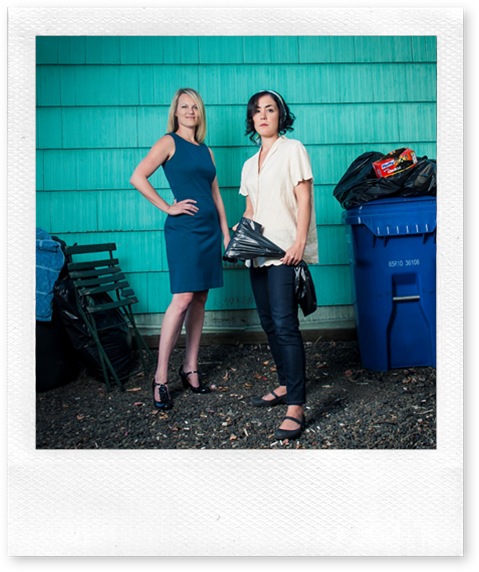
  • Ballard House Duet’s Poster is Here!

    Ballard House Duet’s Poster is Here!

    There’s nothing quite like a show’s  poster going live to underscore the message: “This sh*t is happening!”

    You can get your tix here.  (Do the math. {Small house + short run} * {dynamite cast + crackerjack production team} = early sellout!)

    You can stay up-to-date  on additional Ballard House Duet information as it comes available by “liking” the Custom Made Plays Project Facebook page here.

    And as always, I’ll do my best to keep you up to date here at Just Wrought. More fun news is on the way, I promise!

  • Ballard House Duet: Just the Facts

    Ballard House Duet: Just the Facts

    Blogging is hard. You have to keep posts short to hold people’s attention, but then a project comes along like Ballard House Duet and all I want to do is tell everyone every little thing about it. I want to describe why it’s been so important to me creatively: how it’s been so fun, but also stretched me; why I think every playwright should try custom writing for individual actors; why I think the play tells a locally grown story Seattleites can uniquely identify with; and on and on.

    I am, however, going to show some restraint, by limiting myself in this post to delivering the simple facts.  Ballard House Duet grew out of local actor Rebecca Olson’s idea to commission plays crafted especially for individual actors in Seattle. Says Olson:

    The process begins with a blank page; the actors themselves are the basis for the play, and the actors stay attached to the script from conception through performance. The project includes development, workshops and full production of the finished scripts. This model allows the playwrights to draw on the individual and collective experiences of the artists they are working with. The resulting plays are more satisfying to produce and more resonant with local audiences.

    Olson offered me the honor of being the premiere guinea pig playwright. Hana Lass is Rebecca’s castmate, and Erin Kraft leads the project as director and unofficial dramaturg (though Hana and Rebecca certainly had a hand in that as well. More on that later.)

    We kick this premiere off on December 7 (‘cuz nothing bad has ever happened on that date, right?) and run for two short weeks in a small house, so you’re gonna wanna get your tix quick, by clicking here.

    Here’s a synopsis . . .

    Heidi doesn’t say the word “adopted”.  Holly’s her full sister, even if she is half-Asian and Heidi’s all American.  Somehow Holly inherited Aunt Nana’s religion gene, while Heidi got Mom’s need to be the center of attention.  Now in their 30’s the two sisters have agreed to clear out their hopelessly hoarding great aunt’s house, but when Heidi shows up a week late, hoping to film the process for a reality show, the past and future explode, scattering the shrapnel of strong, deeply hidden betrayals and even stronger, more deeply hidden loyalties.  As they wade through a lifetime of accumulated possessions – and personal grudges – Holly and Heidi must decide: What has value and what are they better off just throwing away?

    And here are the production details . . .

    WHAT:  Ballard House DuetA Custom Made Play Project & World Premiere

    WHO:  Written by Paul Mullin  for actresses Hana Lass and Rebecca Olson; directed by Erin Kraft.

    WHEN:  December 7-17th, 2012, Thursdays through Mondays at 7:30pm; Sneak Peak Thursday Preview, December 6th @ 7:30pm

    WHERE:  608 19th Avenue East, at The Little Theatre in Capitol Hill

    TICKET INFORMATION:  Tickets are $15-$25 and are available at the door or in advance at www.washingtonensemble.org.

  • 14/48 Raises the Stakes Again, then Again

    14/48 Raises the Stakes Again, then Again

    I was going to write another essay about 14/48 running up to this summer’s festival.  I’m an old hand at essays about 14/48. In fact, I once wrote an essay about how an essay I wrote about how 14/48 is partly responsible for all these essays I wright here at Just Wrought.  Talk about recursion.

    I was going to write an essay about how 14/48 serves as a sort of “stealth” semi-annual Seattle theatre convention, encouraging theatre artists of different disciplines, different experiences and varying amounts of “dues paid”, to get to know each other when otherwise they might not. I was going to point out that such a convention has to be “stealth”, and it has to contain as its main component the compressed camaraderie that only producing a show together creates. If someone offered to host a “Seattle Theatre Convention” where we all just gathered to chat, flirt, and share war stories, I am certain nearly no one would come. The younger theatre artists all have better things to do, mostly centered around boozing, bullshitting and getting laid. And the older theatre artists all have better things to do, mostly centered around dealing with the consequences of our earlier boozing, bullshitting and getting laid. It’s not that we old-timers don’t like you, Young Seattle Theatre Artists— far from it.  You are, as the kids like to say, hella fine. But we are never gonna come to your pick-up kickball games or your Facebook arranged Karaoke nights starting after 9:30. Shit ain’t happening. The only thing I start after 9:30 at night is a bath. 14/48 forces us together, young and old, in the only way that matters: putting on a show. Just by participating I have come to know upwards of a hundred amazing artists that elsewise I might only know as names in a program.

    Okay. So that’s what I would have said about 14/48.  And it would’ve been enough.  But the 14/48 powers-that-be have sprung some surprises for this summer’s festival, yet again upping the ante of their game. The first week of the world’s quickest theatre festival will take the form of the oft threatened but heretofore never actually implemented “kamikaze” version.  Normally seven playwrights are selected to write 10 minute plays on a randomly selected theme. The plays, written between 10 pm the night of the selection and 8 am the next day, are then randomly assigned a director who randomly casts from a pre-selected pool of actors. Over the next 10 or so hours the plays are rehearsed. At 8pm, less than 24 hours from when they were conceived, the plays a performed before a rather demanding live audience.  At 10:30 pm they are performed again, before a whole new audience. And then all of it happens again the next day. If you’re thinking, “Wow, that sounds like an ass-kicker,”  you are thinking rightly.

    So what is Kamikaze? Nothing short of more randomness, more risk. 45 veterans have been invited to participate without knowing ahead of time which of the disciplines they will working in: acting, directing, writing, band or design. 14/48 co-founder Jodi-Paul Wooster explains the rationale behind adding the Kamikaze twist: “Over the years, we’ve had a number of talented artists say ‘thanks for inviting me to [blank] but I’ve always wanted to [other blank]’ To those brave folks I say: ‘Careful what you wish for.’”

    As if these Kamikaze rules weren’t wrinkle enough, a few weeks later 14/48 will twist the festival in a different direction, staging it outdoors for the first time at Seattle in the gardens on the eastern side of the Seattle Repertory Theatre. “We can never rest on our laurels,” says Jodi-Paul. “Our audience and artists expect not only new plays but new ways of creating these plays.”

    I must confess a bit of shameful glee at the terror with which many of my fellow invitees are facing the Kamikaze weekend. If you break down the numbers of any given 14/48, you’ll find that actors comprise by far the largest plurality of participants.This mirrors the world of normal theatre. On the other hand, of the 45 total participants only seven are playwrights, or 15.5%. This proportion exceeds that of modern American theatre by an abnormally high value. Normally writers are much smaller minority: maybe two percent, maybe less. For many Seattle actors, 14/48 is the only chance they ever have to collaborate with a living breathing playwright to produce a brand new work.  So the thought of having to wright a new work in 10 hours can be petrifying. One good friend, an actor, reached out to me for advice: “Yo, … can you give me 3 things to help me thru my fear. Maybe 3 tips to help me tell a good if not moderately acceptable story.” I’ll share my reply, lest my buddy acquire any unfair advantage from my advice, which seems damned unlikely.

    Hey!

    It’s all gonna turn out good, you know, and by my math you only have a 15% chance of being drawn as a writer. But still, I’m happy to offer a few tricks of the trade, to be taken with a grain of salt, because if you find something doesn’t work for you, toss it right away.

    1) Beginning, Middle, End. That’s the best trick. You have a situation. It’s static, in balance, but only just barely. Something’s wrong with it. It cannot sustain. That’s your beginning. Something happens to change that situation, throw it out of balance, either from inside or outside, either someone MAKES the change happen or it happens to them. Doesn’t matter. But change happens. That’s your middle. Things happen in the struggle for a new balance to be struck. …. It could be bad (MACBETH), good (MIDSUMMER) or indifferent (WAITING FOR GODOT), but the lights fall on a new order. This is your end. In 14/48 your best bet is to give 1-2 pages to the beginning. 3-5 pages to the middle, and probably not more than 1 page to the end. Your mileage may vary, but do remember, when you hit the end of typewritten page six, you are done.

    2) Start jotting down ideas, characters, snippets of dialogue that strike you. Keep a little notebook. If you find yourself stuck on the night of writing, open this up and draw from it, at random if you have to. Some may say this is cheating, but there’s an old saying in baseball, if you ain’t cheating a little bit, you ain’t trying hard enough.

    3) Trust. You’ll be working with 45 of Seattle’s very best theatre artists, all 14/48 veterans. We’re experts at making this shit fly. You don’t need to do it all by yourself as a writer. (The dirtiest secretest secret about playwrights is that we’re at our best when we are at our laziest.) Trust that some brilliant folks will come in and fill the gaps. And notice that I didn’t say you’d be working with 44 of Seattle’s best. I said 45 ‘cuz I’m counting you. Trust you. You’re fucking awesome.

    Hope that helps. Feel free to bug me some more if you get worried. It’s gonna kick ass though, so don’t worry too much.

    pm

    My last 14/48 essay was called “Holy Fear” and in it I argued that  healthy fear is essential to making good theatre. 

    It is what keys us into the audience’s experience of the immediacy of the moment. If you’re not feeling it, then chances are the audience won’t be feeling much of anything.  And, alas, they’re used to that. If they want “perfection”, they stay home and watch the boob. Our fear as theatre artists fuels the whole machina ex deus that is theatre.

    Oddly, less than two weeks out, I am mostly fear-free. I suppose, like a childish Luke Skywalker, I don’t really know enough to be afraid. And now, having written that, chill bumps rise on my arm, and I hear Yoda saying, “You will be.”

    The confirmed Artist Roster for 14/48 Kamikaze is: Jose Amador; Ahren Buhmann; Susanna Burney; Dave Clapper; Trick Danneker; Nik Doner; John Farrage; Brandon Felker; Bret Fetzer; Mark Fullerton; Julia Griffin; Basil Harris; Alyssa Keene; Erin Kraft; Mik Kuhlman; JD Lloyd; Hana Lass; Teri Lazzara; David- Anthony Lewis; John Lutyens; Corey McDaniel; Ben McFadden; Pamala Mijatov; Pattie Miles Van Beauzekom; Scotto Moore; Paul Mullin; Peter Dylan O’Connor; Opal Peachey; Nik Perleros; Celene Ramadan; Shane Regan; Jaime Roberts; Carl Sander; Charles Smith; Roy Stanton; Allison Strickland; Erik Van Beauzekom; Jonah Van Spreecken; Doug Willott and Anthony Winkler.

    Tickets for 14/48 Kamikaze can purchased in advance at Brown Paper Tickets, by clicking here. I highly suggest you do.  They will sell out.