Just Wrought

Recovering playwright, once won a STRANGER Genius Award for theater. Now writing a bloated novel about… G-d help me! Theatre.

Category: Seattle

  • A Bountiful Fall Harvest for Seattle’s Locally Grown

    A Bountiful Fall Harvest for Seattle’s Locally Grown

    Seattle’s scene for locally grown plays has always been stronger than your average mid-sized city’s, but anything good is worth fighting to make better. That’s why I mouthed off over two and a half years ago with an essay titled “Theatre takes Place: Why Locally Grown Plays Matter”.  I listed some bullet points explaining why the development of new plays is so crucial to the health of any great theatre scene:

    • “Local actors evolve a better understanding of how their contribution … can be generative as well as interpretive.
    • “Local audiences evolve a better understanding of how plays get made and how they can participate in the process….
    • “Local funders evolve a better understanding of their roles as patrons of the arts…
    • “Local funders, artists, and administrators …[can see] the development of plays as actual investments, with the potential to pump profits back to Seattle in several ways.”
    • I even complained that the then recently introduced TPS  Gregory Awards had a category for “outstanding director” but none for playwright, a blunder since rectified.

    Mouthing off is fun, but theatre is a collaborative art form.  Unless others join the fray it isn’t much more than meaningless monologue.  Happily, the last few years have shown just how much a modest city can grow as a theatre town when a group of motivated professionals put their collective mind to it.  For instance, last year A Contemporary Theatre finally took another chance on a local playwright by producing Yussef El Guindi’s  Pilgrims Musa and Sheri in the New World.  The gamble paid off big-time: El Guindi won The Harold and Mimi Steinberg/ATCA New Play Award (plus the $25,000 that comes with it), and American Theatre Magazine just published the script in its current September 2012 issue.

    Keri Healey’s new play Torso, produced by Printer’s Devil Theater, mesmerized everyone I know who saw it.  I suspect it is no coincidence that Keri has been short-listed for a Stranger Genius Award this year.  Torso recently doubled down on local impact with its currently running second production on Orcas Island.

    These are just two stand-out success stories from many.  And this fall promises another bountiful harvest of locally grown new theatre.  Again, just to name and explain a few (with a promise to blog separately on some as they come closer):

    14/48 outdoors for the first time ever

    A few weeks ago I raved about the glorious gamble the 14/48 steering committee was then making by staging their first “Kamikaze” festival, but this weekend they are amping up their Summer of Risk by staging the instant theatre festival outdoors for the first time in their 15 year history.  Tickets are free (also a new twist) so it’s hard to see how you could afford to miss it. (More info here.)

    The Betty Plays

    Beloved local actor Betty Campbell doesn’t get around as easily as she used to, so five local playwrights, myself included, wrote four short plays tailored to her unique and extraordinary talents.  This special Theater Schmeater offering is the sort of one-of-a-kind live experience that only happens in Seattle.  (Click here for more information  and here for reservations.)

    NCTC’s Foreclosure by Vince Delaney

    One of Seattle’s hottest acting ensembles workshops one of Seattle’s hottest playwrights, as he tackles an issue facing Americans nationwide  There aren’t many performances scheduled for this pre-world premiere, so you better reserve early.

    Sandbox Radio Live!

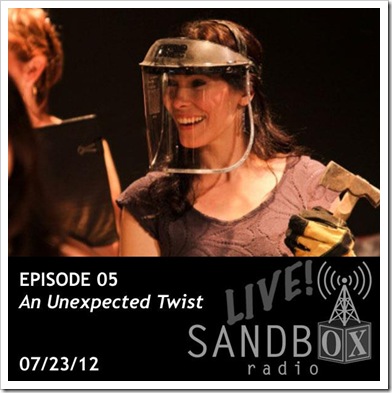
    1. The podcast from Episode 5: “An Unexpected Twist” recently dropped.  (A blog on that to come.)
    2. A “Best Of” show kicked ass at Bumbershoot!  (Check out this review.)
    3. And Episode 6: “Something Wicked This Way” is coming very soon: October 1 at West of Lenin.

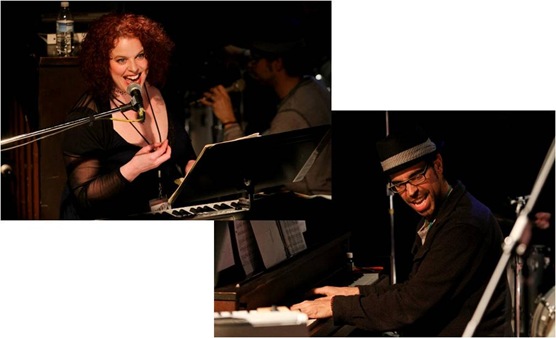
    Why is Sandbox Radio Live! so important to Seattle’s locally grown theatre movement?  Because it happens every quarter and every quarter it gets better.  Because nearly every play, poem or commercial is written by top local playwrights and performed by top local actors.  Because it is fresh local “produce” at its best and most consistent.

    Custom Made Plays

    In my opinion this may just be the most exciting new wrinkle in Seattle’s locally grown scene, and not just because I have the good fortune of being the inaugural playwright.  Brainchild of local actress Rebecca Olson, the Custom Made Play Project  is dedicated to matching Pacific Northwest playwrights with local actors to develop and produce new plays of regional significance.  In my case, after interviewing my collaborating actors, Ms. Olson and Hana Lass, I tailor-made the soon-to-world- premiere Ballard House Duet to their unique talents and qualities.  Because of that, I am painting with colors I have never used before, and I’m loving it.  The resulting script simply would not exist were it not for these unique one-on-one collaborations. That fact excites me.

    Here’s another fact: Seattle is the best city in the country—maybe even the world— for locally grown theatre.  And we are only getting better and better at growing it.  As you can see from the small sampling above, it’s going to be an awesome autumn harvest.  It makes you wonder what next winter, spring and summer will bring.
  • Sandbox Radio Shoots Bumber

    Sandbox Radio Shoots Bumber

    I know, I know.  The biggest complaint about Sandbox Radio Live! is that the super fun recording sessions are always sold out, making it damned tough to watch the magic being made.  Of course, the final magic is always eventually available to you as a podcast.  In fact, Episode 5: “An Unexpected Twist” just recently dropped and is available here .

    Tracy Hyland

    But now Seattle’s beloved arts festival Bumbershoot is offering a one time solution to this conundrum.  This coming Labor Day (September 3) is your chance to see a “best of Sandbox Radio Live!” at the Center Theatre in the Armory, which has about thrice as many seats as our usual venue.  We will start at 7pm and pack an episode’s worth of fabulousness in just one hour. 

    Here’s what’s in store:

    “Notes from the Workplace” by Vincent Delaney

    “Why We Run” by Scot Augustson

    PSAs for Hanford Challenge and World Arts Access

    A blues tune from Charles Leggett and The Sandbox Radio Orchestra.

    Ads from “The Back of the 358” and a teaser for what’s coming in Markheim by Paul Mullin

    “T-Minus” by Elizabeth Heffron

    “Barcarolle” from Tales of Hoffman featuring special guest soprano Heather Curtis Mullin,  and more!

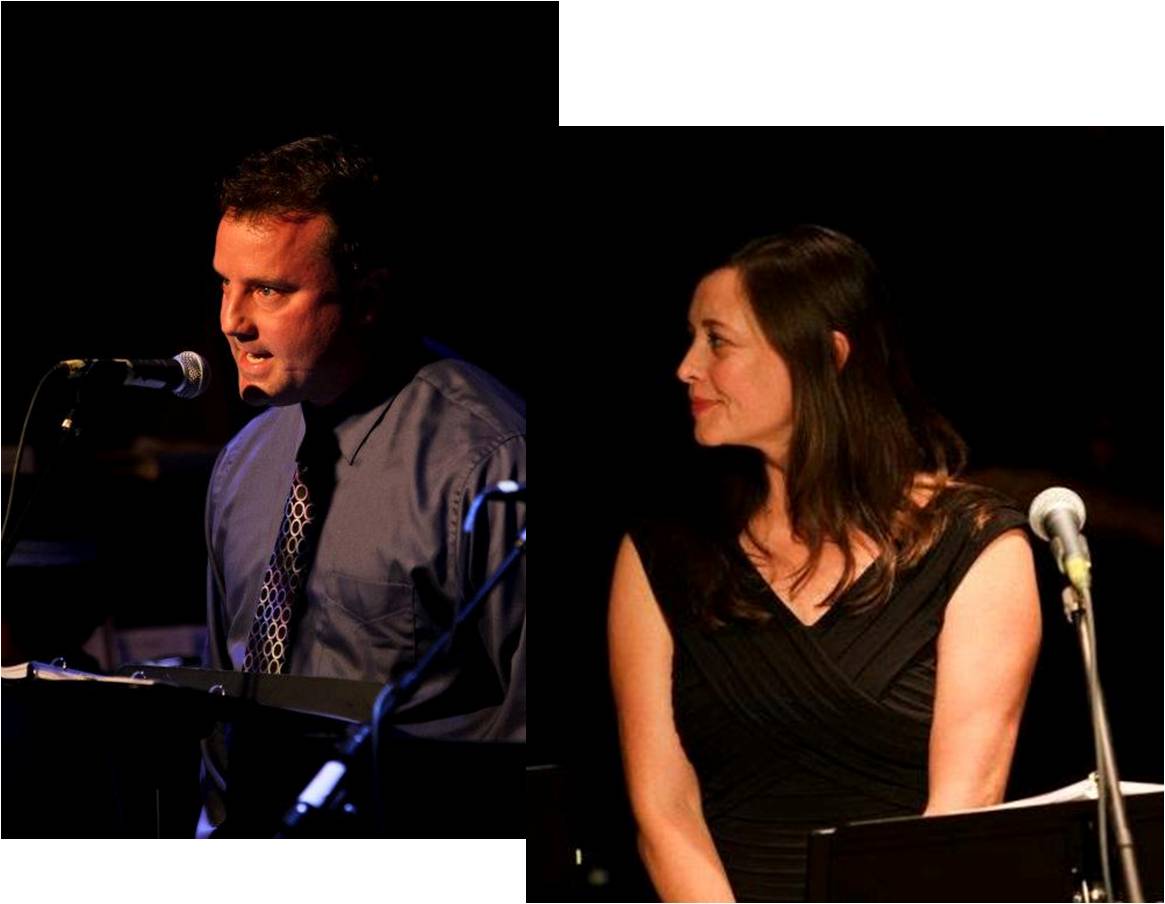
    You read that correctly.  My wife will be singing.  And I will be acting: reprising my role of Sam, Prince of the World, in my on-going noir angel detective series, Markheim.  That makes this Bumbershoot performance the very first time that Heather and I have shared a professional stage.  So come see Sandbox Radio Live! at Bumbershoot and watch some hot history being made.

    Paul & Heather Mullin

  • Uplift of Fear

    I just ran across these impressions I jotted to myself after surviving my stint as a “virgin” actor in the last 14/48. It seems appropriate to post them, with the Kamikaze artists draw less than 10 hours away.

    The terror hit me like a fever about a half hour before the first show’s curtain. The day went by in a punishing blur: a vivid dream in which one is never really sure how much time is going by until suddenly someone is saying “We tech in 20 minutes.” And then someone else is saying, “Let’s break for dinner.” And then someone else is saying, “Places for Show One, people, places.”

    “Thank you, places.”

    I was in the second of seven ten-minute plays. I stood in the house-right vom looking up and out onto the stage, half-watching and listening to the first play, a funny piece about swinger birds by Doug Willott called “Duck/Penguin”. I couldn’t really concentrate on the piece, since I was undergoing a vast existential amazement: confounded and astounded that somehow the individual circumstances of my life had brought me here to this deeply horrifyingly moment. Why was I here? Who does this to themselves? It’s one thing to be an asshole, but only a stupid asshole plots his own very public humiliation. 

    It was an oddly uplifted dismay.  Nothing depressed or depressive about it. 

    And then the lights were changing and the band was playing and I was going on. As I noted in my earlier essay, as an actor, once you’re on you’re on. The terror doesn’t disappear, but it is forced by the demands of actual performance to sit in the back seat and shut the fuck up. There’s nothing you can do when you’re sliding down the mountain except make your goddamned best effort to steer and maybe hope to outrun the avalanche. 

    And then I was marching offstage. And then I was done.  For a couple hours at least. I still had the second show, which now, miraculously, I wasn’t dreading at all.

    By the first show of the second day the process had actually become fun, though terror was still sitting there in the back seat, sitting on her hands.

    (more…)

  • 14/48 Raises the Stakes Again, then Again

    14/48 Raises the Stakes Again, then Again

    I was going to write another essay about 14/48 running up to this summer’s festival.  I’m an old hand at essays about 14/48. In fact, I once wrote an essay about how an essay I wrote about how 14/48 is partly responsible for all these essays I wright here at Just Wrought.  Talk about recursion.

    I was going to write an essay about how 14/48 serves as a sort of “stealth” semi-annual Seattle theatre convention, encouraging theatre artists of different disciplines, different experiences and varying amounts of “dues paid”, to get to know each other when otherwise they might not. I was going to point out that such a convention has to be “stealth”, and it has to contain as its main component the compressed camaraderie that only producing a show together creates. If someone offered to host a “Seattle Theatre Convention” where we all just gathered to chat, flirt, and share war stories, I am certain nearly no one would come. The younger theatre artists all have better things to do, mostly centered around boozing, bullshitting and getting laid. And the older theatre artists all have better things to do, mostly centered around dealing with the consequences of our earlier boozing, bullshitting and getting laid. It’s not that we old-timers don’t like you, Young Seattle Theatre Artists— far from it.  You are, as the kids like to say, hella fine. But we are never gonna come to your pick-up kickball games or your Facebook arranged Karaoke nights starting after 9:30. Shit ain’t happening. The only thing I start after 9:30 at night is a bath. 14/48 forces us together, young and old, in the only way that matters: putting on a show. Just by participating I have come to know upwards of a hundred amazing artists that elsewise I might only know as names in a program.

    Okay. So that’s what I would have said about 14/48.  And it would’ve been enough.  But the 14/48 powers-that-be have sprung some surprises for this summer’s festival, yet again upping the ante of their game. The first week of the world’s quickest theatre festival will take the form of the oft threatened but heretofore never actually implemented “kamikaze” version.  Normally seven playwrights are selected to write 10 minute plays on a randomly selected theme. The plays, written between 10 pm the night of the selection and 8 am the next day, are then randomly assigned a director who randomly casts from a pre-selected pool of actors. Over the next 10 or so hours the plays are rehearsed. At 8pm, less than 24 hours from when they were conceived, the plays a performed before a rather demanding live audience.  At 10:30 pm they are performed again, before a whole new audience. And then all of it happens again the next day. If you’re thinking, “Wow, that sounds like an ass-kicker,”  you are thinking rightly.

    So what is Kamikaze? Nothing short of more randomness, more risk. 45 veterans have been invited to participate without knowing ahead of time which of the disciplines they will working in: acting, directing, writing, band or design. 14/48 co-founder Jodi-Paul Wooster explains the rationale behind adding the Kamikaze twist: “Over the years, we’ve had a number of talented artists say ‘thanks for inviting me to [blank] but I’ve always wanted to [other blank]’ To those brave folks I say: ‘Careful what you wish for.’”

    As if these Kamikaze rules weren’t wrinkle enough, a few weeks later 14/48 will twist the festival in a different direction, staging it outdoors for the first time at Seattle in the gardens on the eastern side of the Seattle Repertory Theatre. “We can never rest on our laurels,” says Jodi-Paul. “Our audience and artists expect not only new plays but new ways of creating these plays.”

    I must confess a bit of shameful glee at the terror with which many of my fellow invitees are facing the Kamikaze weekend. If you break down the numbers of any given 14/48, you’ll find that actors comprise by far the largest plurality of participants.This mirrors the world of normal theatre. On the other hand, of the 45 total participants only seven are playwrights, or 15.5%. This proportion exceeds that of modern American theatre by an abnormally high value. Normally writers are much smaller minority: maybe two percent, maybe less. For many Seattle actors, 14/48 is the only chance they ever have to collaborate with a living breathing playwright to produce a brand new work.  So the thought of having to wright a new work in 10 hours can be petrifying. One good friend, an actor, reached out to me for advice: “Yo, … can you give me 3 things to help me thru my fear. Maybe 3 tips to help me tell a good if not moderately acceptable story.” I’ll share my reply, lest my buddy acquire any unfair advantage from my advice, which seems damned unlikely.

    Hey!

    It’s all gonna turn out good, you know, and by my math you only have a 15% chance of being drawn as a writer. But still, I’m happy to offer a few tricks of the trade, to be taken with a grain of salt, because if you find something doesn’t work for you, toss it right away.

    1) Beginning, Middle, End. That’s the best trick. You have a situation. It’s static, in balance, but only just barely. Something’s wrong with it. It cannot sustain. That’s your beginning. Something happens to change that situation, throw it out of balance, either from inside or outside, either someone MAKES the change happen or it happens to them. Doesn’t matter. But change happens. That’s your middle. Things happen in the struggle for a new balance to be struck. …. It could be bad (MACBETH), good (MIDSUMMER) or indifferent (WAITING FOR GODOT), but the lights fall on a new order. This is your end. In 14/48 your best bet is to give 1-2 pages to the beginning. 3-5 pages to the middle, and probably not more than 1 page to the end. Your mileage may vary, but do remember, when you hit the end of typewritten page six, you are done.

    2) Start jotting down ideas, characters, snippets of dialogue that strike you. Keep a little notebook. If you find yourself stuck on the night of writing, open this up and draw from it, at random if you have to. Some may say this is cheating, but there’s an old saying in baseball, if you ain’t cheating a little bit, you ain’t trying hard enough.

    3) Trust. You’ll be working with 45 of Seattle’s very best theatre artists, all 14/48 veterans. We’re experts at making this shit fly. You don’t need to do it all by yourself as a writer. (The dirtiest secretest secret about playwrights is that we’re at our best when we are at our laziest.) Trust that some brilliant folks will come in and fill the gaps. And notice that I didn’t say you’d be working with 44 of Seattle’s best. I said 45 ‘cuz I’m counting you. Trust you. You’re fucking awesome.

    Hope that helps. Feel free to bug me some more if you get worried. It’s gonna kick ass though, so don’t worry too much.

    pm

    My last 14/48 essay was called “Holy Fear” and in it I argued that  healthy fear is essential to making good theatre. 

    It is what keys us into the audience’s experience of the immediacy of the moment. If you’re not feeling it, then chances are the audience won’t be feeling much of anything.  And, alas, they’re used to that. If they want “perfection”, they stay home and watch the boob. Our fear as theatre artists fuels the whole machina ex deus that is theatre.

    Oddly, less than two weeks out, I am mostly fear-free. I suppose, like a childish Luke Skywalker, I don’t really know enough to be afraid. And now, having written that, chill bumps rise on my arm, and I hear Yoda saying, “You will be.”

    The confirmed Artist Roster for 14/48 Kamikaze is: Jose Amador; Ahren Buhmann; Susanna Burney; Dave Clapper; Trick Danneker; Nik Doner; John Farrage; Brandon Felker; Bret Fetzer; Mark Fullerton; Julia Griffin; Basil Harris; Alyssa Keene; Erin Kraft; Mik Kuhlman; JD Lloyd; Hana Lass; Teri Lazzara; David- Anthony Lewis; John Lutyens; Corey McDaniel; Ben McFadden; Pamala Mijatov; Pattie Miles Van Beauzekom; Scotto Moore; Paul Mullin; Peter Dylan O’Connor; Opal Peachey; Nik Perleros; Celene Ramadan; Shane Regan; Jaime Roberts; Carl Sander; Charles Smith; Roy Stanton; Allison Strickland; Erik Van Beauzekom; Jonah Van Spreecken; Doug Willott and Anthony Winkler.

    Tickets for 14/48 Kamikaze can purchased in advance at Brown Paper Tickets, by clicking here. I highly suggest you do.  They will sell out.

  • Law and Gonzales on KING

    Law and Gonzales on KING

    Check out Marta Zekan’s interview on KING FM 98.1’s Arts Channel featuring Sandbox Radio creator Leslie Law and Music Director José Gonzales. 

    And no complaining about how the upcoming Episode 5: An Unexpected Twist is already sold-out unless you’ve gone to our podcast page (click here) and listened to the previous episodes.   (Or listened on iTunes, click here.)

  • One Great Year One–Sandbox Radio Live!

    One Great Year One–Sandbox Radio Live!

    Back in April we staged the fourth episode of Sandbox Radio Live, “The Chase” rounding out a year of producing this unique offering of all local theatre talent.  The podcast of this last show is now available here.


    Episode 4, “The Chase”
    recorded at West of Lenin on April 16, 2012

    @1:42    “Stewart and Miriam” by Elizabeth Heffron
    @10:52   “Markheim: Episode 4” by Paul Mullin
    @25:40   “Why We Run” by Scot Augustson
    @29:35   “Ain’t Gonna Chase After You” Charles Leggett
    @33:25   “The Back of the 358 #4” by Paul Mullin
    @34:50   “Straight With Chaser” by Ki Gottberg
    @42:54   “Always Disappearing” by Juliet Pruzan
    @56:20   “The Back of the 358 #5” by Paul Mullin
    @57:40   “Child of the Second Tier” by Elizabeth Heffron
    @1:04:32 “I’m Always Chasing Rainbows”
    @1:07:53 “The Back of the 358 #6” by Paul Mullin
    @1:09:45 “Squeeze Play” by Vincent Delaney
    @1:22:00 “Finale/Credits

    It was a great evening, as the Sandboxers have really hit their stride generating and performing work intended especially for the pleasures of listening.  For me the standouts of the evening were poems by Scot Augustson and Elizabeth Heffron, “Why we Run” and “Child of the Second Tier”; plus Charles Leggett’s hard blowing “Ain’t Gonna Chase After You” blues, getting its sassy behind kicked by Leslie Law’s second mic vocals.

    In July we’ll kick off a whole new year, with Episode 5 “An Unexpected Twist”, be there to share the making of the magic.

    And per tradition, below the fold you’ll find the script for Episode Four of Markheim, should you care to follow along as you listen.

    (And thanks again to John Ulman for taking such great photos!)

    (more…)

  • Boiled Frogs

    Boiled Frogs

    Josh Parks is a fellow veteran from Annex Theatre’s golden years in the early to mid 90’s.  Josh starred in my favorite Annex show of all time, Bessemer’s Spectacles by Glen Berger.  Nowadays it is wisest not to mention the show to anyone involved with it if you don’t want to hear an earful.  Apparently it was a clusterfuck to produce, but produced it was, and beautifully, devastatingly so.  When the house lights came up after the curtain call everyone but me filed out of the theatre. I had to stay where I sat.  Couldn’t get myself zipped back together.  My was heart pulled open and sore and I couldn’t stop the tears from streaming down my face.  Josh also did a few other turns across the Annex stage, including Faith Healer.  A production still is provided below.  Josh stands to the far right alongside the incomparable Susanna Burney, left, and some guy named Paul Giamatti, center.  (Wonder what ever happened to him.)

    I can claim zero credit for what Josh says below, beyond cutting and pasting it with permission from his Facebook page, and maybe suggesting the title.  While many of us have sat stuck in these ever warming waters of theatrical ineffectuality, Josh has been living his life, raising his family, working his jobs.  The essay describes his experiences jumping briefly back into our pond. 

    Clybourne Park is the first equity house (non Christmas) production I can remember seeing in at least 10 years. Maybe 15. That was a big part of what pushed me from “That play sounds interesting,” to actually being willing to shell out $116 for two tickets (more on that later). I was not only interested in what the play had to say, I was very interested in what the experience of an evening of theater had to say. The world has changed so much on so many fronts over the past 10 to 15 years, I felt like I had a unique opportunity to see how theater had evolved over the same period of time, having very few intervening reference points to color my thinking.

    You may have an idea where this going.

    But before we get there, one of the striking things about the experience was that the most memorable line did not come from the play, it came from the preshow ask, delivered by a board member. I believe he said something like, “As you probably don’t know, the price of your ticket only covers about half of the cost of production.”

    Really? In the 10+ years since I’ve been to a show has the Rep really done such a poor job of educating its patrons on this issue? Are there any regular Seattle arts patrons who don’t know this? I am the opposite of a regular, and I knew it. “For those who may not know…” or something that didn’t insult the intelligence of what I imagine to be a big chunk of the audience would have made a surprisingly big difference. To me anyway.

    Even more memorable was the impression, having shelled out over $100 for my tickets, that the Rep was trying to make me feel — even before having seen the show — like I had received what I should regard as a temporary discount. I found that off-putting. There seemed to be very little appreciation for the fact that we had already given them our money, and a lot of appreciation for the fact that, “little did I know,” I had actually come up a little short in their eyes.

    OK, so now that I’ve been made to feel like I’m not doing enough to support the arts (even though every dollar is “meaningful”), on with the show!

    The production was serviceable. The playwriting was really not as good as I had hoped, nor was the direction, which seemed to be trying (but failed) to make a lot of the dialogue come across as Aaron Sorkin-esque line-chopping rapid-fire banter. The acting was good enough.

    But what’s the word to encapsulate the experience, the energy in the room, the aftertaste? “Quaint” seems to be the most persistent answer. As the play unfolded I found myself amazed at how little things had changed since I last saw an Equity house production, and I have been pondering that ever since. When I think about what the world was like in 1998 and where we are now, how so many industries, and governments, and lives have been transformed in that time, the experience of going to the theater seemed to have stood still. The production I saw was certainly no worse than any quality production I could have seen years ago. But much more important (and surprising), it was absolutely not a single bit better. And suddenly it occurred to me, could this be at the heart of theater’s “decline” (LORT theaters anyway)?

    I was expecting some progress, some innovation, some sign that what the Rep and similar establishments offer does in fact track the change/progress going on in the real world. Certainly the subject matter of the play was “relevant” and “topical” to a degree, and it was connected to a famous play and film in an ostensibly interesting way. But the actual production itself, including the means by which it was staged, struck me as really no different from anything I have ever seen on any stage anywhere. And that surprised me. I was not expecting virtual reality goggles, but I realized as it was happening (or not happening) that I was expecting something. I understand there are limitations on what can change about a play and still have it be a play, but I was stunned to feel like I had stepped out of a time machine.

    Thus, my Colonial Williamsburg comment. Was this really creativity? Or was it about recreating a notional idea of theater. Playing the experience out into the future, I can imagine some day that the experience of going to a play at an Equity house could become more and more like attending a concert of Baroque music on the original instruments. Quaint. A bit odd. And — no offense to anyone who has mastered the sackbut — just as relevant to the human condition.

    I imagine in the days of O’Neill and Williams and Miller and Shaw and Coward and even Neil Simon for God’s sake, that theater thrived because it was one of the places people went to see something cool, something current. It wasn’t a place where ideas were rehashed — be they about politics, society, design, lighting, or acting — it was a place where they were born.

    Unfortunately, I find I don’t have many answers, just questions. Where is the surprise, the creativity, the unexpected, the brilliance? If there isn’t some in every element of the show, why should anyone bother? I see you and like-minded folks trying that with This Not Just In. I can think of exceptions to a lot of my ranting, but dare I say most of them are from the fringe element in Seattle, where the quality index is a lot more volatile, but it also doesn’t cost as much to get in the game. There are people who are trying to create theater they wouldn’t have seen 15 years ago, certainly, but the impression I have is that isn’t what gets a lot of established theater people out of bed in the morning, and that baffles me. Maybe it shouldn’t, but I’m glad it does.

  • May 31, 2005

    Returning to posting entries from my attempt seven years ago to filibuster my second child into the world. After skipping several (too boring, too much family laundry) I prepped this one to post.  Then yesterday happened.  Then I looked at the piece again and thought “Well, it’s got a little hope in it, why not?”

    Blessings and hope to you all. (And happy 10th birthday, Decky.)

    Tue May 31 2005 at 5:52:2 UTC

    2005.05.30 at 21:49 doyle says re May 30, 2005 : life is in the mundane details–the key to happiness is not just knowing this, but believing it–you have a head start as a mick–just having food on the table is a fucking miracle. god bless. the baby is coming in the next 36 hours-a

    2005.05.30 at 21:49 doyle says hunch, but a strong one.

    Wisdom plus prognostication from the Good Doctor! And how can we argue or doubt him? Well, my wife is hoping that he’s wrong with his prediction at least, since that would most likely make the new baby’s birthday the same as my three year-old son’s, but frankly I could care less, since the two anniversaries are going to be too close for little kid comfort in any case.

    I was thinking about what Doyle said while I was meditating today. Of course, that’s a no-no. You’re not supposed to be thinking about anything, really. Then again, you’re not supposed to get distracted by fighting the inevitability of random thoughts either. But hell, it’s that damned-if-you-do-and-don’t essence of Zen that attracted me to it in the first place I should backtrack a few hours. Heather, Declan and I went to Northwest Folklife at Seattle Center this morning. Our first stop was a stage where some girls were doing Irish dancing (god help me!). Now Declan loves dancing, but he was a little queasy from the bus ride down, so he kinda just sat in his mamma’s lap and watched, rapt. I pulled the stroller over to the side of the stage so I wouldn’t be blocking everyone’s view. In front of me were two toddlers, girl and boy, slightly smaller than my boy, dancing away to the infernal Hibernian strains. The little girl was a gorgeous strawberry blonde delight, clearly a danger to hearts decades hence. And she twirled with delight and abandon. A plain day miracle. My favorite kind.

    Then I felt someone touching my shoulder. “Paul? Paul Mullin?” I turned and saw a familiar face, though the woman was at least a decade older than the image in my head. “Kim” was the name that flashed into my head.

    “It’s Kim! I knew it was you. Mark said he was sure because of the scar.”

    “Of course. Kim. We worked together at My Friend’s Café.” I was starting to put it together. Kim and I shared one of the shittiest restaurant gigs ever, 50¢ over minimum wage plus zero tips, slinging breakfast at Green Lake yuppies in a café run by a grand Canadian git named Wayne.

    Then Mark walked into my field of vision. His name flashed into my head much like “Kim” did. He, too, looked a decade past my memory of him. Did Mark work at the café, too? I couldn’t remember.

    And then Kim was kind enough to piece it together for me, while not letting on that she knew I was half clueless. The short story is this: Kim hated the café gig even worse than I did. She was desperate for something new, and my then live-in girlfriend, soon-to-be-ex-wife, who was banquet manager down at the Rainier Club, landed Kim a job waitressing down there. Mark was a busboy at the club. Kim met Mark– I think their first kiss may have even been at one of our notorious parties—and the rest is history, except for Annabelle. Annabelle is the future.

    The strawberry dancing miracle that had delighted me to begin with. Kim and Mark’s two-year old daughter. Annabelle.

    It really wasn’t that extraordinary an episode at first glance. I’d half-forgotten about it until I was sitting there in zazen, thinking about what Doyle messaged. But let’s break it down for a moment. If it hadn’t been for me, slaving away in the steaming food grime and coffee grit of that café another lifetime ago, then meeting Kim and introducing her to the great failed relationship of my life, then this little wonder wouldn’t be. And it wasn’t anything in particular I did. It wasn’t the power of my words as a playwright, or my sharpened perception or deepened compassion as a Buddhist. No. It was just me, living, struggling, connecting to someone else, living, struggling: and, thirteen years later, here’s Annabelle!

    Lao Tzu, via Ursula Le Guin‘s “version” says: “Live long by looking long.” In Tao years, Doyle’s six-hundred and forty-nine years old. Today I’m exactly one day older than I am.

    And Doctor Doyle, if you’re reading this, we’re approximately six and a half hours into your 36 hour window as I type.

  • The Problem Intiman Faces (And Every Other Theatre)

    We’ve been batting around over at Facebook the recent news that the Intiman’s landlord, the City of Seattle, has essentially put a “For Rent” sign in the Playhouses window.  (See here and here for more details.)

    Annex Theatre‘s Managing Director, the inestimable, incomparable Stephen McCandless framed the problem as accurately, as succintly and as implacably as I have ever heard it put:

    “The economics of producing a play and running a venue are not entirely complimentary. To frame it in business-school vocabulary, producing a play requires an Entrepreneur, the venue a Manager.”

  • White Boy Can Take a Punch

    The only thing disappointing about an evening of theatre like last night’s Hoodies Up! is that it only happens once and then it’s gone forever. I suppose that’s part of what makes it special. I certainly felt blessed to watch some truly gift actors bring back to life a cherished chapter from my days working in D.C.  Witnessing such miracles is one of the unique perks of being playwright that helps explain my continuing gluttony for its punishments.

    Because it is unlikely that my contribution to last night’s offerings will ever be staged again, I offer the script here to anyone who missed it and might want to check it out in script form.

    (more…)