Just Wrought

Recovering playwright, once won a STRANGER Genius Award for theater. Now writing a bloated novel about… G-d help me! Theatre.

  • Simultaneous Publication: Legit Experiment or Hat on a Hat?

    Simultaneous Publication: Legit Experiment or Hat on a Hat?

    Sometimes when you risk a lot with a piece of art, it pays to find ways to risk even more. Or at least that’s the counter-intuition behind the newest wrinkle in the Custom Made Play Project. A couple days ago a box arrived at my house containing exactly fifty copies of my soon-to-world-premiere play Ballard House Duet. Given the unique circumstances of its development (which I blog about in some detail here), the idea light-bulbed to offer a published version of the play simultaneously with its world premiere production.  After all, we custom made this play for two local actors, Hana Lass and Rebecca Olson: a Seattle story for Seattle audiences in the purest vein of locally and organically grown new theatre.  What better way to underscore how we are trying to change the way plays are made than to offer tangible printed proof of the pudding for sale.

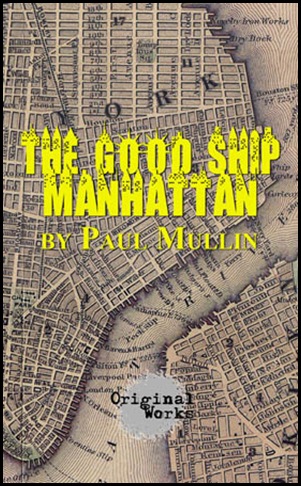
    So I emailed my friend and colleague Jason Aaron Goldberg, president of Original Works Publishing in Los Angeles.  OWP publishes acting edition scripts and licenses productions of plays by “bold, original, and adventurous playwrights from around the globe.” I currently have three plays in their catalogue:  An American Book of the Dead* – The Game Show†, The Sequence, and The Good Ship Manhattan.  Other Seattle playwrights have plays with OWP as well. For example, Elizabeth Heffron’s Mitzi’s Abortion received some strong productions around the country after OWP’s decision to publish it. 

    I think it is fair to say that Jason was less than enthused by my idea. He told me OWP had looked at simultaneous publishing before, but never pulled the trigger. They prefer for a play to have a production history in advance of publishing it. This only makes sense. Productions work the kinks and flaws out of a play, not to mention garner reviews from which you can pull quotes for the script’s back cover. I, however, pressed my proposal. I agreed to absorb the financial risk of printing the scripts if OWP was willing to risk a bit of its institutional reputation on the experiment. Jason graciously agreed.

    So now you get to vote on whether this experiment succeeds or fails. I have 45 scripts to sell, each individually numbered and personally signed by me. I have priced them nearly a buck cheaper than what OWP sells my scripts for on their website.  If we do another publishing run of Ballard House Duet, they won’t be sold by me, won’t be signed by me, and won’t be part of a limited numbered edition: so why not buy one now while it’s cheap and special?

    Here are the ways you can buy, in descending order from best to next next best:

    • Go buy your tix to the show now (click here), then buy a script at the door.  (While supplies last.)
    • Ping me with a way to send you my snail mail address.  Once I do, send me a check for $10, and I’ll send you back a script.  (I’ll eat  the postage on this option.)
    • Buy a script on Ebay by clicking here, for $10 plus postage.  (This option allows PayPal.)

    Vote now: the simultaneous publication experiment: success or failure?

  • Bespoken Word

    Bespoken Word

    Have you ever had clothes custom-made for you? I have never been rich enough to afford such a luxury; but theatre, never ceasing to infuse my life with ironies, provided me once with an opportunity to have a pair of 16th Century “pumpkin-pants” plus doublet perfectly cut and stitched to my then much slimmer proportions for a run as Berowne in Love’s Labour’s Lost. Rich or poor, ironic or not, it is always a superbly satisfying feeling to have a something fit you like a second skin. I imagine actors must feel a similar satisfaction when roles are tailor-written for them, which is exactly what I have done for two extraordinary Seattle actors, Hana Lass and Rebecca Olson, in a play called Ballard House Duet, premiering in a little over two weeks at Washington Ensemble Theatre.

    It started with an email from Olson back in June of last year, asking if I would be interested in being the guinea pig playwright for her proposed project to develop new plays written specifically for local actors. For this first outing, she said, the actors would be herself and Hana Lass.

    I responded with interest. It certainly sounded like a strong move toward the sort of locally grown new work I had been advocating here at Just Wrought. I told her my one caveat was I wanted only to write: no producing, no promotion, no administration.  Having served as Newswrights United’s Executive Producer, and having just staged the second of two fully produced Living Newspapers, I was burned out with wearing other hats.

    Rebecca agreed to my proviso, which then left us facing the proto-existential question: how to start?  Okay, so I am writing for Rebecca and Hana, but what am I writing? What kind of characters do I build for them? What kind of story? Would the play require additional actors? Would I write specifically for them as well, or write now and cast later?  I decided to pull a trick out of my NewsWrights bag.  I set up casual interviews with each actress. I wasn’t sure what I was looking for.  Maybe it was just an excuse to indulge my nosiness without seeming too creepy.  I drafted up a list of questions which, digital packrat that I am, I still have.

    Questions for Hana and Rebecca

    What kind of roles do you get type cast in?

    What kind of role have you always wanted to play but never got a chance to?

    Do you have a sister(s)?  {Clearly I was already thinking in that vein.}

    Tell me about your relationship to her.

    If you could change one thing about your sister what would it be?

    What are your weaknesses as a performer?  Strengths?

    What are my weaknesses as a playwright?  Strengths?

    If there’s one thing you could change about Western / American Culture what would it be?

    I had a lot of fun indulging my nosiness under the guise of art.  I found out way more about Hana and Rebecca than I ever could have through casual conversation.  Crucially, I discovered that the three of us all had a close relationship with someone who suffered from the very real disease of hoarding. I seized on this as the foundation for the play, literally the ground on which my characters would play. I also confirmed through these conversations that my instinct to make the characters sisters was dead on; but it also raised a problem:  Rebecca and Hana look nothing alike, not even close.  No one would buy them as biological sisters.  “Fine. They’re adopted,” I decided.

    Next I concluded there was no up-side in expanding the character sheet.  I would focus on the two sisters, tracking them back and forth through time.  If they needed to interact with other characters, the audience would have to play them.  I was already experimenting with this technique in another, weirder play I am devloping, Philosophical Zombie Killers.  This piece for  Custom Made Play Project would give me the opportunity to test it in a more realistic framework. 

    Armed with my interview notes and my burgeoning ideas, I started to build a proto-draft, one plot point and/or dialogue scrap at a time. What I didn’t know, I left blank.  From the outset, I was determined to see these two singing.  My own sisters sang all the time in my house, as did my mother, who sang opera as a young woman, and still sings in two church choirs.  My wife also sings opera and jazz.  So somehow, on stage or off, family for me is inextricably mixed up with music: specifically female voices.

    Point by point, emerging limitations made the play grow.  This is not surprising.  Problems are a playwright’s best friend. Conflict is our soup; obstacles, the chewy nuggets we chop into it.  The unique qualities of my two performers sharpened my focus and maximized my momentum.  For the first time in a long time, there was something— or rather someone or some ones— tugging from the other side.

    Hana claims I had a first draft within two weeks of the second interview, but my rather anal-retentive record keeping shows it was more like five.  Still, that’s a damned fast turn-around for me.  The play has come a long way since this first stab, but the basic shape of the plot and the relationships has survived and expanded.

    The most remarkable aspect of the process, which I feel cannot be emphasized enough, is that Ballard House Duet simply would not exist if we three specific people had not existed and offered it some part of ourselves. Without Hana and Rebecca to build them for, Holly and Heidi simply would have never occurred to me. Not only would the story have gone untold, it would have gone unconceived.  For me that fact is fundamentally astounding and magical.

    I have no idea yet if the play succeeds or fails.  We will need an audience for that final analysis. (That’s where you come in.  Go get your tix!) What I do know is that the experiment itself was completely, utterly worth it. I encourage every playwright to give this sort of personal tailoring a try. 

    Despite how exciting this Custom Made Play Project has been, it only seems like we are doing something new and innovative. The truth is most of the plays we praise in the canon were created bespoke for specific actors. Following this old process is not immediately easy or intuitive, but in the die-press production line, hub-and-spoke distribution network that is 21st Century American Theatre, Seattle is perfectly poised in its Goldilocks perfection— not to big, not to small— to revive a method that can maximize the vitality of locally grown new works for stages across the nation.

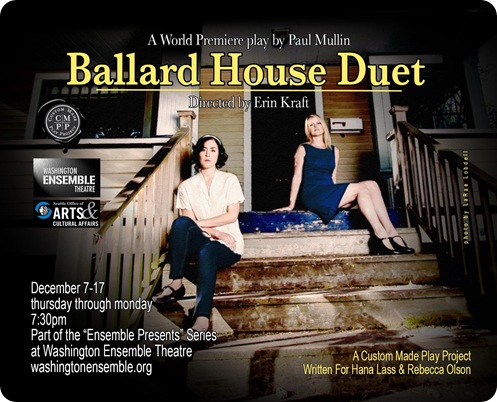
  • Ballard House Duet’s Poster is Here!

    Ballard House Duet’s Poster is Here!

    There’s nothing quite like a show’s  poster going live to underscore the message: “This sh*t is happening!”

    You can get your tix here.  (Do the math. {Small house + short run} * {dynamite cast + crackerjack production team} = early sellout!)

    You can stay up-to-date  on additional Ballard House Duet information as it comes available by “liking” the Custom Made Plays Project Facebook page here.

    And as always, I’ll do my best to keep you up to date here at Just Wrought. More fun news is on the way, I promise!

  • A Day Beyond Veterans Day

    Now that we have thanked the men and women who have served and continue to serve in our nation’s military, it is appropriate that we give deep thought to how can make their service obsolete.

    Nearly all nations have soldiers, but not all nations are free. Having a great military does not make us a great nation. Only a nation worth fighting for can consecrate the sacrifice of those who give their lives and take the lives of others in our name. The poets, the thinkers, the artists, and indeed, all the citizens must exercise the freedoms that others have fought for, or the fighting— stop— let us call it what it is: the killing and dying— will truly all have been in vain.

    Let the United States of America not aspire to be the greatest military power in the world. We have already reached this questionable goal. Let us aspire instead to make military might unnecessary, and indeed, as unthinkable and anathematic as slavery is now.

  • Ballard House Duet: Just the Facts

    Ballard House Duet: Just the Facts

    Blogging is hard. You have to keep posts short to hold people’s attention, but then a project comes along like Ballard House Duet and all I want to do is tell everyone every little thing about it. I want to describe why it’s been so important to me creatively: how it’s been so fun, but also stretched me; why I think every playwright should try custom writing for individual actors; why I think the play tells a locally grown story Seattleites can uniquely identify with; and on and on.

    I am, however, going to show some restraint, by limiting myself in this post to delivering the simple facts.  Ballard House Duet grew out of local actor Rebecca Olson’s idea to commission plays crafted especially for individual actors in Seattle. Says Olson:

    The process begins with a blank page; the actors themselves are the basis for the play, and the actors stay attached to the script from conception through performance. The project includes development, workshops and full production of the finished scripts. This model allows the playwrights to draw on the individual and collective experiences of the artists they are working with. The resulting plays are more satisfying to produce and more resonant with local audiences.

    Olson offered me the honor of being the premiere guinea pig playwright. Hana Lass is Rebecca’s castmate, and Erin Kraft leads the project as director and unofficial dramaturg (though Hana and Rebecca certainly had a hand in that as well. More on that later.)

    We kick this premiere off on December 7 (‘cuz nothing bad has ever happened on that date, right?) and run for two short weeks in a small house, so you’re gonna wanna get your tix quick, by clicking here.

    Here’s a synopsis . . .

    Heidi doesn’t say the word “adopted”.  Holly’s her full sister, even if she is half-Asian and Heidi’s all American.  Somehow Holly inherited Aunt Nana’s religion gene, while Heidi got Mom’s need to be the center of attention.  Now in their 30’s the two sisters have agreed to clear out their hopelessly hoarding great aunt’s house, but when Heidi shows up a week late, hoping to film the process for a reality show, the past and future explode, scattering the shrapnel of strong, deeply hidden betrayals and even stronger, more deeply hidden loyalties.  As they wade through a lifetime of accumulated possessions – and personal grudges – Holly and Heidi must decide: What has value and what are they better off just throwing away?

    And here are the production details . . .

    WHAT:  Ballard House DuetA Custom Made Play Project & World Premiere

    WHO:  Written by Paul Mullin  for actresses Hana Lass and Rebecca Olson; directed by Erin Kraft.

    WHEN:  December 7-17th, 2012, Thursdays through Mondays at 7:30pm; Sneak Peak Thursday Preview, December 6th @ 7:30pm

    WHERE:  608 19th Avenue East, at The Little Theatre in Capitol Hill

    TICKET INFORMATION:  Tickets are $15-$25 and are available at the door or in advance at www.washingtonensemble.org.

  • This Change is Playwright Approved

    This Change is Playwright Approved

    Theatre tradition runs rife with jokes, sayings and funny stories about actors and playwrights, and their divergent natures.

    Question: How many playwrights does it take to change a light bulb?

    Answer: The light bulb doesn’t need any changes.

    * * *

    Question: What’s the difference between a working Seattle actor and a large pepperoni pizza?

    Answer: A large pepperoni pizza can feed a family of four.

    * * *

    “The average actor craves approval; the above average playwright craves disapproval.”

    These clichés occasionally harbor a smidgeon of truth, but persist as mostly empty stereotypes. However, I do hold one difference between playwrights and other theatre artists to be true and fundamental: we tend to have a keener long-term view of the theatrical environment. This only makes sense. Our work cycle runs to years, whereas most other theatre artists live tactically, month to month; at most, season to season. Playwrights simply scan a farther horizon. (So no, I was not using my psychic powers when I predicted earlier than most the demise of the Intiman as we know it.)

    All this is to say my eagle eyes tell me that ACT just made an exquisite choice by appointing John Langs to the position of Associate Artistic Director, and thereby giving him and his family a reason to make Seattle their permanent home. (You can read a detailed run down of John’s new duties here.)  Unlike other hotshot directors who have been recruited from afar to fill similar roles at Seattle Big Houses, Langs is no elitist carpet bagger. His roots run deep here in Seattle, at Big Houses and small, with him directing work by writers running a gamut from Shakespeare to, well, me.

    Seattle actors love Langs, and he loves them. Seattle playwrights respect Langs, and he respects them. (A dual-facing fact I wish were true for more Seattle Big House administrators.) I won’t tell you John Langs can single-handedly drag Seattle theatre to excellence—he can’t; but he is the piece that perfectly fits a missing part of the puzzle here. Langs has shepherded more excellent new plays to world premiere than any other director I know. He gets why new work is so vital to Seattle’s health as a World Class theatre town. He also gets how nurturing it can help his own career in a way that staging the latest New Yorker-approved off-Broadway hit never could.   

    ACT’s choice is a win for everyone. Langs will grow his already formidable career here instead of elsewhere, and he will grow his fellow Seattle artists with him. For John, Seattle isn’t a stepping stone.  It’s the destination.

    Confidential to John:  carve an hour out of your swamped schedule and let me be one of the first of many to buy you a congratulatory cocktail so I can properly say:

    “Welcome, welcome, a thousand times, welcome. 

    Now… get to work!”

  • Putting the Fail back in “Experimental”

    Putting the Fail back in “Experimental”

    Artists love to talk about being “experimental”, and it rightfully drives scientists nuts.  We artists obnoxiously brandish that word whenever what we really mean is “avant garde” or “edgy”or “provocative” or “abstruse”.  Any actual scientist understands that true experiments have rules and consequences. Experiments are tests of hypotheses hoping to become theories; and theories, in order to prove useful, must be falsifiable.  In other words, true experiments by definition contain the possibility of failure.  However, all too often in the arts, especially theatre, work gets described as “experimental” that is, in fact, incapable of being “falsified”, because it never had a truthful purpose in the first place. Consequently, the worst kind of “experimental artist” will blame the audience for every failure of meaning or impact.

    I promise I will not be doing that this coming Monday evening at the Bathhouse Theater on Green Lake. Instead, with the help of my truly gifted colleagues Susanna Burney, Amy Love, William Salyers and John Q. Smith I will be performing a bona fide artistic experiment by reading aloud my very latest play Philosophical Zombie Killers.  I attempt things in this script I have never seen tried before in the theatre, and thus the ominous likelihood looms that some of these things I am trying can, and most likely will, fail. 

    I am not asking you to come see my greatest latest triumph, which I happen to have dubbed “experimental” cuz it sounds cool.  I am asking you to come see my latest experiment, and help me make it better, by watching where it fails, and letting me know.

    Saint Denis

    Here are the details:

    The graduate level seminar is about human conscious-ness. Or at least that’s what you thought when you signed up for it. Now someone’s telling you that you’re 45 years old and you’re dying. You certainly didn’t sign up for that. Now this alcoholic professor is asking you to explain consciousness to him. And this depressed ex-cop from Missouri is telling you about the epidemic of decapitations in Seattle. And this weird lady from Omnisoft just wants you to admit that there’s no such thing as consciousness and no such thing as you for that matter. Could she possibly be right? Might make dying easier. Who said you were dying?

    Who:       Susanna Burney, Amy Love, William Salyers and John Q. Smith

    What:     Philosophical Zombie Killers by Paul Mullin

    Where:   The Bathhouse Theater in Green Lake

    When:    October 15, 2012, 7pm

    How:      Pay what-you-will, including nothing at all. You’re doing us a favor by giving it a listen.

    Reserve seats at Brown Paper Tickets: http://www.brownpapertickets.com/event/278468

  • Happy Columbus Day from THE GOOD SHIP MANHATTAN

    Happy Columbus Day from THE GOOD SHIP MANHATTAN

    In honor of this dubious-at-best holiday, I offer a relevant excerpt from my play The Good Ship Manhattan.  (Fair warning: for the most part this is a near exact transcription of a conversation that actually happened.  Politically correct, it was not.)


    . . . . GREG:  You gotta live in the real world.

    RICHARD:  Yeah.  And apparently you gotta shit in it too.

    GREG:  Please.  Cry me a river.

    RICHARD:  I’m just saying.

    (Pause, as Greg takes a healthy gulp from his single malt.)

    GREG:  So are all ex-social studies teachers big whiney liberals like you?

    RICHARD:  Actually, my 11th grade American History teacher was a flag-waving, ignoramus Nazi wacko such as yourself: Mr. Capezio.

    GREG:  Oh, he was a wop, too, hunh.

    RICHARD:  I don’t hold it against the wops.  Some of this country’s greatest Leftists were ginnys: Sacco and Vanzetti, LaGuardia, Columbo.

    GREG:  Columbus.

    RICHARD:  No, I said “Columbo”.  As in Peter Falk, as in a joke?

    GREG:  Yeah, and I’m saying “Columbus”.  As in Christopher.

    RICHARD:  Please.

    GREG:  Please what?

    RICHARD:  Do not talk to me about Columbus.

    GREG:  We’re talking about great Americans.  How do you do greater than actually finding the place?

    RICHARD:  Oh boy.

    GREG:  What?

    RICHARD:  Where do I start?

    GREG:  Oh don’t tell me.  You got a beef with Columbus.  You’re one of these idiots out here protesting the fucking parade.

    RICHARD:  Do you know anything about Columbus?

    GREG:  Uh… yeah, I know a little something about Columbus.

    RICHARD:  Like?

    GREG:  Like Fourteen Hundred and Ninety two.  Sailed the ocean blue.  To tell the liberal schoolteachers, “fuck you”.

    RICHARD:  Landed on Haiti.  Immediately enslaved the entire population.  Effectively wiped them out with disease, torture and execution.  Encouraged his men to hunt them for sport.

    GREG:  You wanna compare him to a Nazi now?  That’s you people’s favorite thing to do, isn’t it?

    RICHARD:  Well, let’s see… he rounds up an entire race of people, puts ‘em in camps and proceeds to annihilate ‘em in a holocaustic blood-fest, all in the name of Queen and Cross.  I wouldn’t say it’s an unfair comparison.

    GREG:  And who was it exactly that stopped the Nazis?  Hunh?… 

    GREG:  The Americans.    RICHARD (simultaneously):  The Russians.

    GREG:  Bullshit!

    RICHARD:  Ever heard of Stalingrad?  Got any idea what the casualty rate was for a Soviet infantryman?

    GREG:  All I know is, if it wasn’t for us, the Brit’s would be speaking German right now.

    RICHARD:  That’s the standard Hollywood fantasy.  Unfortunately utter bullshit.

    (The bartender, Ursula, steps closer to listen.)

    GREG:  Yeah, I know: nothing I learned in history class is true.

    RICHARD:  Well–

    GREG:  There’s no such thing as George Washington.  He never crossed the Delaware.  We never kicked ass on the Redcoats and won our independence.

    RICHARD:  I’m not saying that.  I’m saying there’s always more to the story.  Like if it hadn’t been for the French, we’d all be–

    URSULA:  What?  Speaking English right now?

    RICHARD:  What?  That makes no sense.

    GREG:  Makes sense to me.

    URSULA:  That fact is, the French only brought their full support to bear once they were convinced the Continental Army would ultimately beat the British.

    RICHARD:  Which they could only do because Britain was over-extended with her empire stretched across the globe.

    URSULA:  Agreed.  But you can’t deny that the symbolic victories Washington won at Trenton and Princeton after crossing the Delaware– as this gentleman mentioned– and the subsequent winter of drilling and reinforcement at Valley Forge, effectively transforming a motley crew of rag-tag citizens into an inspired fighting force, had nothing to do with the ultimate victory of the Continentals and the formation of the United States that you call home.

    (Ursula steps away to another part of the bar.)

    GREG:  Holy fuck!

    RICHARD:  Whatever.

    GREG:  You think she’s ever modeled?

    RICHARD:  Reductionist claptrap.

    (He drains his glass.)

    GREG:  How much would you pay to fuck her right now?

    RICHARD:  I wouldn’t pay your money to fuck her with your dick.

    GREG:  Yeah.  Okay, teach. . . .

  • My Friend Goes to LA, Becomes Famous Raccoon, Returns to Seattle to Kill Philosophical Zombies

    My Friend Goes to LA, Becomes Famous Raccoon, Returns to Seattle to Kill Philosophical Zombies

    William Salyers and I met during Seattle’s fervent 90’s: a now hazy golden age when you could beg an actor like Paul Giamatti to be in your play workshop, or witness a writer like Karl Gajdusek premiere his deeply surreal, nearly inaccessible Dr.s F.s in the Terminal Ward twenty years before he would premiere his eminently accessible action series, The Last Resort, on national network television. So Bill Salyers and I already sort of knew each other from the scene when were forced by the exigencies of corporate temping into the close proximity of the licensing department of Northern Life Insurance. The two of us would blunt the boredom when we could by improvising various scenarios. I would open with something like:

    PAUL (best British Colonial Officer voice): Do you remember that time in the Congo when the battalion lost its way and we were forced to eat grubs?

    BILL (way better British Colonial Officer voice): Oh, yes. Sergeant Major Grubbs. Terribly good man. Such a pity.

    No one can match Bill for voices and improv.

    When I began writing my play Tuesday— a piece which I now, in retrospect, recognize as my first post-journeyman work— I could only manage to finish it by assuring myself that Bill would play the main character, Audie McCall. That development process, and culminating first production at AHA! Theatre, began a collaboration that lasted over the following 17 years, with Bill premiering the title role of my Louis Slotin Sonata at Circle X Theatre in LA and then playing it off-Broadway, then playing Walt Whitman among several other rolls in An American Book of the Dead – The Game Show, and then inhabiting the skin of the now real-life head of NIH, Francis Collins, in my play about the race to decode the human genome, The Sequence. And it’s not just my plays that Bill has helped to mid-wife. Having run the math, I am now convinced that William Salyers has participated in the world premieres of more plays than any other person currently on the planet. I am still waiting for someone to prove me wrong.

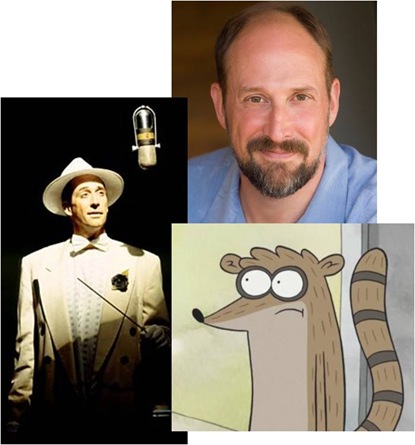
    While the size of the houses my plays premiere in has stayed, well, let’s say “cozy”, Bill has happily gone on to much wider success as a stage actor. For instance, he’s currently premiering Dan O’Brien’s The Body of An American at Portland Center Stage. Beyond the boards, Bill has achieved exponentially greater fame —the kind only Hollywood can offer— for work he’s done as a voice actor. I finally managed to impress my nephews with my show business connections when I told them that the guy who voiced Rigby the Raccoon on The Regular Show was my good friend. (Congratulations to Bill and everyone on TRS for their freshly won Emmy!)

    All this history is just my a long winded wind-up to telling you that Bill will once again be helping me bring a new play to life by playing the role of Simon in a very raw reading of my latest stab, Philosophical Zombie Killers, along with Susanna Burney, John Q. Smith and Amy Love.

    Here’s a sort of synopsis of the play:

    The graduate level seminar is about human consciousness. Or at least that’s what you thought when you signed up for it. Now someone’s telling you that you’re 45 years old and you’re dying. You certainly didn’t sign up for that. Now this alcoholic professor is asking you to explain consciousness to him. And this depressed ex-cop from Missouri is telling you about the epidemic of decapitations in Seattle. And this weird lady from Omnisoft just wants you to admit that there’s no such thing as consciousness and no such thing as you for that matter. Could she possibly be right? Might make dying easier. Who said you were dying?

    And here are the details:

    Who:       Susanna Burney, Amy Love, William Salyers and John Q. Smith

    What:     Philosophical Zombie Killers by Paul Mullin

    Where:   The Bathhouse Theater in Green Lake

    When:    October 15, 2012, 7pm

    How:      Pay what-you-will, including nothing at all. You’re doing us a favor by giving it a listen.

    Reserve seats at Brown Paper Tickets: http://www.brownpapertickets.com/event/278468

    Zombie Bill

  • I Love Shout-Outs from Across the Pond

    I Love Shout-Outs from Across the Pond

    In this case, it’s from Honour Bayes, on WhatsOnStage.com referencing my essay “The Problem of Horror in Theatre”. Parsing horror, terror and dread for the stage is a challenge that continues to fascinate me. I think we did a pretty excellent job exploring it in last night’s taping of Sandbox Radio Live’s “Something Wicked This Way”, but I still wonder if true horror can be developed and sustained throughout a full-length play.

    Check out Ms. Bayes’ thoughts here.

    After all, ‘tis the season.